Chickasaw Nation Peacemakers reflect on experience of serving peacemaking court

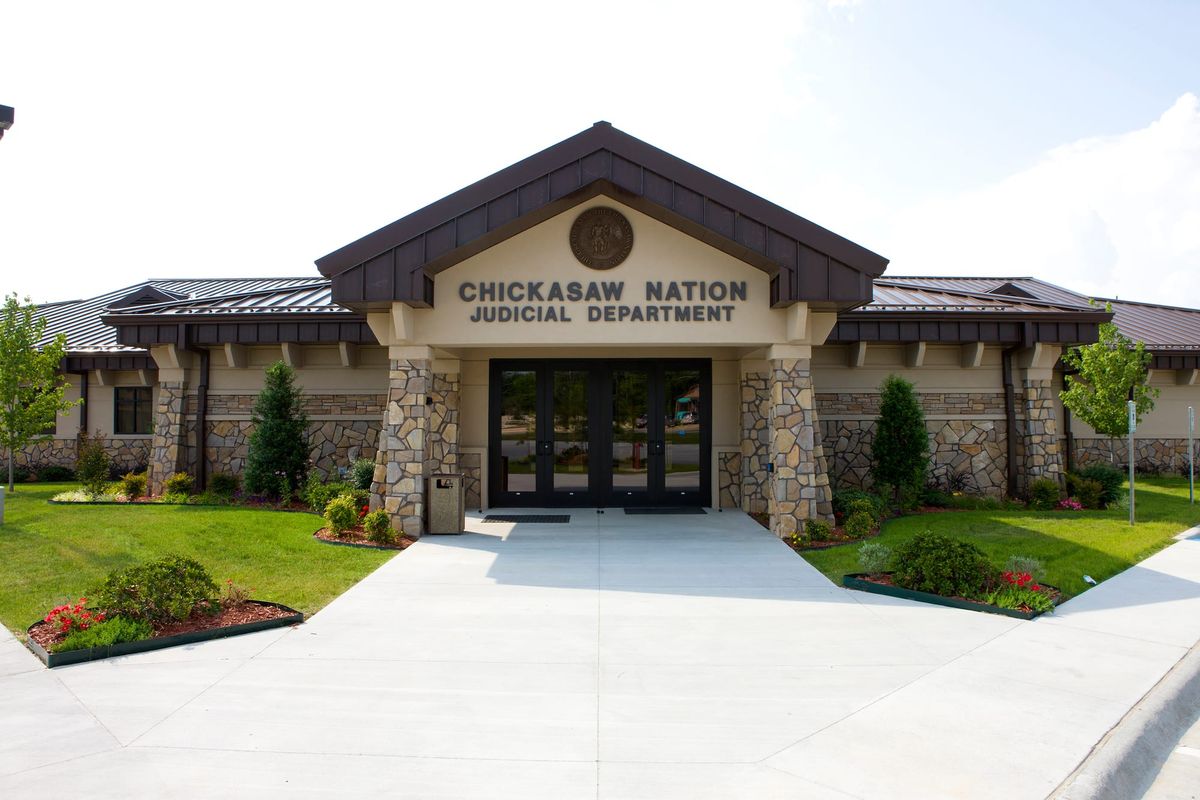
(CHICKASAW RESERVATION) The Chickasaw Nation is one of 30 tribes across the United States that allows members to resolve certain disputes outside of a regular courtroom and instead in a Peacemaking Court.
Rather than facing a judge at opposing counsel tables with attorneys present, the disputing parties gather in a circle with a peacemaker appointed by the Chickasaw Nation Supreme Court.
“We sit around a round table because that means no one is higher than the other,” said Tewanna Edwards, one of the court's peacemakers. “We’re all equal there.”
Despite the less formal environment, rules still govern a Peacemaking Court.
“With the peacemakers, they [the disputing parties] can share whatever their issue is, and they get to speak for themselves as to their concerns. And we use a talking piece, the Eagle Feather, and whoever is talking has the Eagle Feather, and no one can interrupt them while they’re talking,” Edwards said.
The Indigenous Peacemaking Initiative, an advisory group developed by the Native American Rights Fund, lays out the differences between court, mediation and peacemaking.
According to the group, a peacemaking court is a place where consensus and common ground are prioritized, as opposed to the winner-take-all approach of a typical courtroom.
Wayne Edgar, who serves on a peacemaking team with his wife Linda Sue, says he has a few rules that help keep things on track in the circles he facilitates.
“I will say to them, ‘If you have to make bad faces, if you feel like you must raise your voice, then you will look at me,’” Wayne Edgar said. “‘You will not look at anybody else from the circle. You will look at me.’ And it takes some of the fire out of it.”
Often, the parties in conflict are families seeking resolutions to legal issues. Disputes range from those involving children and their parents to custody battles, in-law and parental rights, and spousal issues.
Wayne Edgar says one of the strengths of the peacemaking court is the opportunity it provides to dissect these relational dynamics and identify the underlying issues.
As a peacemaker, Wayne Edgar attempts “to peel back the many, many layers, many layers of some kind of abuse or mistrust, and reach the real problem.” These complicated issues can be difficult to uncover, but he said, “once you’ve found that and touched that problem, then healing and restoration takes place.”
The Edgars said working as a peacemaking team allows them to see all angles of a situation.
“What Wayne and I do, I kind of see the woman’s side, he sees the man’s side, and we kind of understand both sides together,” Linda Sue Edgar said.
She said it is amazing to see families come together after the peacemaking process.
“We've seen it happen multiple times when they come in with hate in their hearts,” Linda Sue Edgar said. “And they leave hugging and crying and say, ‘Thank you, I didn't even know that the Chickasaw Nation had this available.’”
The peacemakers see honoring Chickasaw traditions as part of the process and a major factor in the Peacemaking Court's success.
“As peacemakers, we encourage people in an atmosphere where they agree to be respectful to each other and to treat each other with dignity,” Wayne Edgar said. “And in many cases, those are new concepts. They are ancient concepts of the Chickasaw Nation. But in a modern era, sometimes those things are lost.”
The opportunity to serve as a peacemaker is something Edwards does not take lightly.
“It’s been a blessing to give back to the tribe in a manner where our people can heal and move forward as a family unit,” Edwards said.
For a case to be resolved in a peacemaking court, all parties must agree to a resolution. If a resolution is not reached, the case is sent back to the district court.
Other Oklahoma tribes that offer peacemaking courts include the Choctaw Nation and the Kiowa Tribe.