Data centers and their environmental impacts

By: Jennifer Jalbert
(STILLWATER, Okla.) Over the past several months, residents of many Oklahoma communities have made it clear where they stand on data centers coming to their areas. Lawsuits and litigation over data centers, both current and proposed, are in full swing across Oklahoma and the nation. Residents and officials in Sand Springs, Piedmont, Pawhuska, Oklahoma City, and other communities are pushing back, perhaps inspired by public backlash against the Google data center currently under construction in Stillwater.
Data centers house servers to power the internet and other networked computer technologies. While the number of data centers has steadily increased over the years, generative artificial intelligence has led to a surge in new and proposed construction to meet the unprecedented storage and processing needs posed by this new technology. But while many people have eagerly adopted generative AI, few seem to support building data centers in their own communities.
Individual reasons for opposing data centers range from the practical to the ethical. Many residents cite concerns about the lack of transparency in corporate agreements and the risk that data centers will strain local infrastructure, particularly municipal water resources. Moreover, data centers consume large amounts of energy from local power grids, raising concerns that their presence will increase utility rates and the cost of living for community members.
Environmental impacts of data centers
Beyond these practical concerns, some citizens oppose data center construction because of the environmental threats posed by these massive industrial complexes, including the destruction of land and wildlife habitats and water, noise, and light pollution. These issues are at the heart of ongoing litigation in Stillwater, where residents say a Google data center destroyed a neighborhood pond and green space and led to habitat destruction of local wildlife and decreased property values.
“Data centers require hundreds if not thousands of acres of land,” said Edmond Bonjour, senior Extension specialist in the Department of Entomology and Plant Pathology at Oklahoma State University. “Construction often results in wildlife losing their habitats and farm animals being displaced.”
Destruction of farmland and wildlife habitats due to the initial construction of these data centers involve removal of cattle, sheep, chickens, and goats from land surrounding the development areas. Trees, grass, and shrubbery, ponds and lakes used to feed and house local wildlife are the first to be destroyed as building begins. Pollution of surrounding bodies of water from chemical run-off, including biocide, corrosion inhibitors, and heavy metals are caused by the improper containment of construction sites.
What happened in Stillwater
In 2025, the Stillwater Planning Commission unanimously approved Google’s construction plans for a large data center complex near the intersection of Perkins and Richmond Roads. Still under construction, Google plans to build six 300,000-square-foot buildings that will span about 300 acres of land.
In December, the Homeowners Association of the nearby ParkView Estates neighborhood filed a lawsuit against Google, Manhattan Construction and the city of Stillwater for what the plaintiffs call massive environmental damage to their neighborhood pond and surrounding green space.
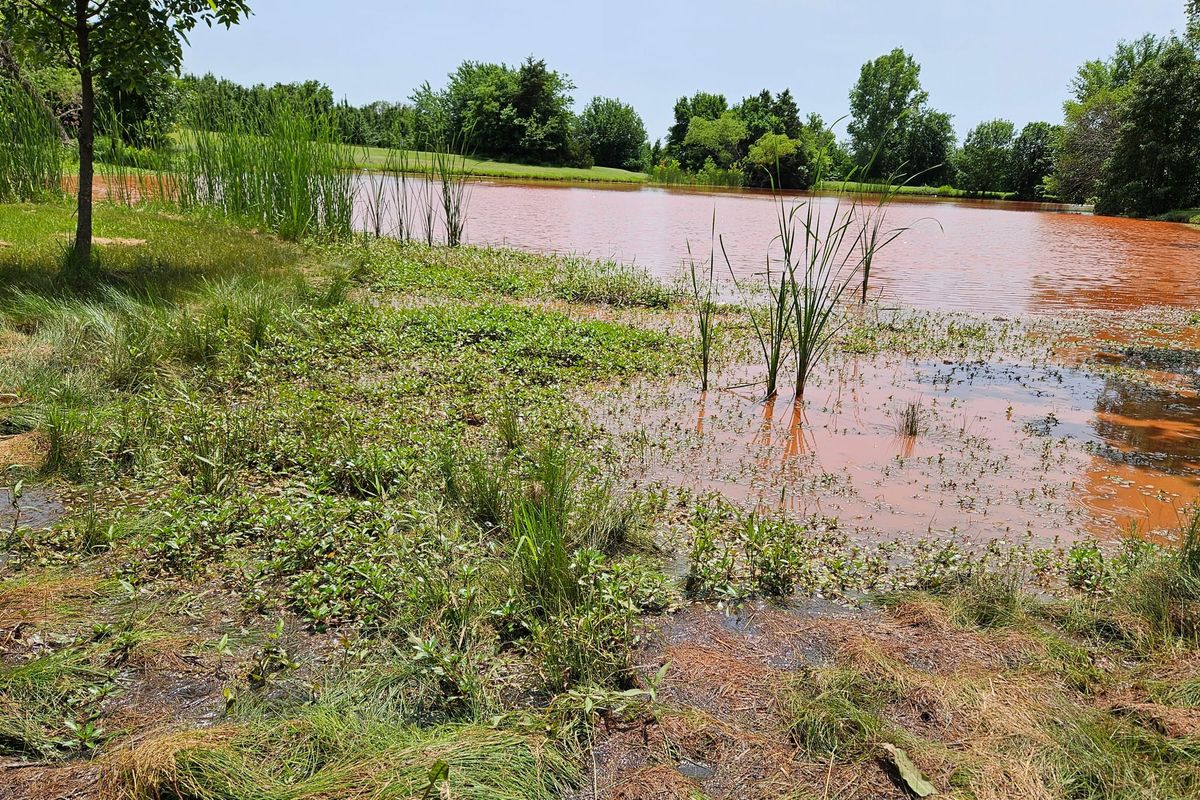
The lawsuit alleges that Manhattan Construction, which is building the data center, failed to properly contain the construction site to prevent run-off. Several days of heavy rain in the summer of 2025 resulted in continuous run-off from the construction site into the neighborhood, flooding the pond and nearby area with red mud, silt and construction debris.
According to the lawsuit, the run-off killed all of the wildlife in the pond, including fish, turtles and frogs. Deer, ducks and geese left the area and have not returned. Soon after, deep holes started forming in the ground surrounding the pond. The pond continues to receive polluted construction site run-off with each rainfall.
“ParkView’s pond has always been a centerpiece to our neighborhood,” said HOA president Doris Harake. “The lack of planning and implementing a containment plan has destroyed our pond and the wildlife that lived there.”
Residents say the ruined pond is not the only damage resulting from the project. The data center produces a constant humming noise, which some say exceeds 90 decibels (city documents from the project planning phase claimed it would never exceed 65 dB). For comparison, 95 dB is about the level of a nearby power lawnmower, a volume that can be heard up to two miles away.
Data centers also generate constant light pollution that experts say may disrupt circadian rhythms, bird migration patterns, and habitat development among wildlife including birds, butterflies, bats and turtles.
Residents of the two affected neighborhoods, ParkView Estates and Tower Park, have reported continued interrupted sleep, abnormal pet behavior and loss of neighborhood wildlife. Some long-time homeowners have moved out of the neighborhood since the construction began.
Tribal nations respond
Tribes across Oklahoma and throughout the country are saying NO to data centers. Indigenous Oklahomans within the Mvskoke Reservation expressed environmental and sovereignty risks tied to data centers.
The Seminole Nation of Oklahoma passed a unanimous vote to implement a permanent moratorium on AI and hyperscale data center development within its jurisdiction.
Tribal leaders in Michigan have halted all data centers after community pushback.
The Eastern Band of Cherokee Indians tribal council unanimously passed an ordinance that established an indefinite ban on data centers within trust and deed lands.
As more and more communities, both rural and tribal, are given the option to vote on whether these data centers wreak havoc on their towns, the future of data centers remains in limbo.
This story was developed through StoryKeepers, a Crosswinds News program dedicated to sharing community stories, cultural knowledge, lived experiences, and important issues impacting Native communities.