
Engaging with Native Communities: A Listening & Learning Tour Report 2025
Produced by Crosswinds News (Formerly VNN Oklahoma)

Supported by the Walton Family Foundation
Executive Summary
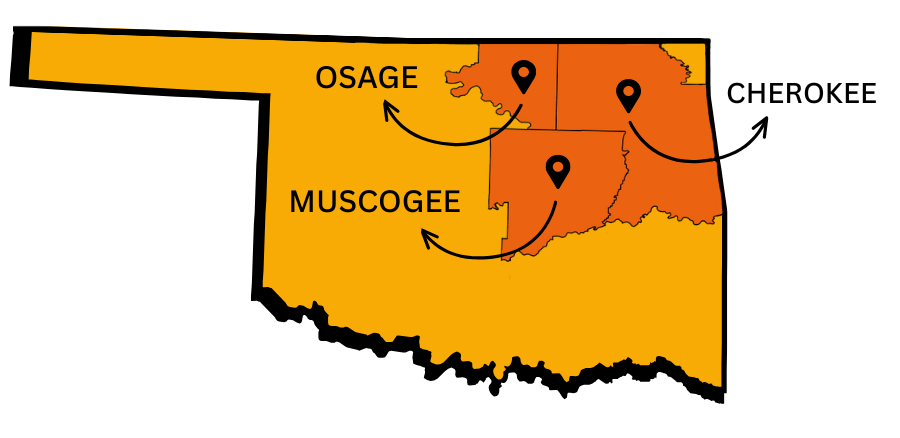
In 2025, Crosswinds News (formerly Verified News Network Oklahoma) conducted a five-stop Listening & Learning Tour Across Northeastern Oklahoma Reservations, engaging more than 100 community members across the Muscogee (Creek), Cherokee, and Osage Nations, along with two sessions held in Tulsa.
A sixth, bonus engagement - the Cultural Series - brought total participation to over 240 attendees. (See Addendum)
The tour’s purpose was to listen directly to Native American community members about how they access information, what they want covered in the news, and what barriers prevent their full participation in community spaces. Across all sessions, participants expressed a shared desire for more community informed and culturally grounded storytelling that reflects Native life and priorities.
Key findings revealed significant gaps in local and tribal news coverage, distrust in government and media, and strong support for Native-led reporting. Participants emphasized the importance of representation, education, culture, and accountability in both tribal and municipal systems.
Each community expressed unique challenges - from Eufaula’s call for inclusion in civic processes to Tahlequah’s concerns about environmental health and voter participation - but all echoed the same underlying truth: Native people want to see themselves accurately represented and heard in the media that serves them.
The findings from this tour directly inform our organization’s next chapter as Crosswinds News. The tour reinforces the urgent need to invest in community-powered, Indigenous-led media that uplifts Native voices, increases community involvement, and builds trust across diverse audiences.
These findings make a compelling case for sustained investment in projects like StoryKeepers (piloted as the VNN Citizen Journalism Project), which seek to expand community-based Native journalism in the very areas visited during this tour. Such initiatives restore community trust in information systems and build lasting media infrastructure rooted in Native values and voices.
Acknowledgments
This project was made possible through the generous support of the Walton Family Foundation. Additional in-person event support was provided by American Press Institute, Listening Post Collective and Advancing Democracy.
Crosswinds extends its gratitude to all the community members, tribal leaders, and partners who shared their time and perspectives throughout this process. Their voices continue to guide our mission of supporting Native storytellers and strengthening community-driven solutions that honor the realities, diversity, and strength of Indigenous peoples across Oklahoma and beyond.
Background
After seven years of listening, reporting, and collaborating with Native families, tribal leaders, and grassroots organizations, Verified News Network (VNN) Oklahoma evolved into something more focused, more responsive, and more reflective of the communities we serve. That evolution gave rise to Crosswinds News.
Today, Crosswinds is primarily Native-focused and Native-staffed, with multimedia journalists, community members, cultural advisors, and mission-aligned organizations leading the work. Our mission is to carry stories from Oklahoma’s 39 tribes - connecting Native families and allies from the heart of Indian Country. Our inspiration comes from the intersections of identities, races, and experiences that shape Native families connected to Oklahoma’s 39 tribes - whether they live in their Tribal community or elsewhere. These diverse perspectives guide our work and remind us that the stories we carry are not bound by geography, but by the people they come from.
The Listening & Learning Tour 2025, made possible largely in part through the generous support of the Walton Family Foundation, was part of Crosswinds’ larger effort to better understand the diverse information needs of Native communities across northeastern Oklahoma and to ensure that journalism reflects those needs and the experiences of the people it serves. The tour’s 5th stop was made possible thanks to additional support from Advancing Democracy and Listening Post Collective. The tour’s bonus cultural series was made possible in part by the American Press Institute. Through five tour stops and one cultural engagement event, the project gathered critical insights into community priorities, trust in local media, civic inclusion, and the barriers Native people face in both accessing and producing news.
Event Logistics
Timeline of Stops: May through October 2025
Tulsa (Muscogee Nation) - 12 attendees
Pawhuska (Osage Nation) - 15 attendees
Tahlequah (Cherokee Nation) - 10 attendees
Eufaula (Muscogee Nation) - 43 attendees
Tulsa (Closing Session) - 31 attendees
Total Regular Tour Stop Attendance - 111 attendees
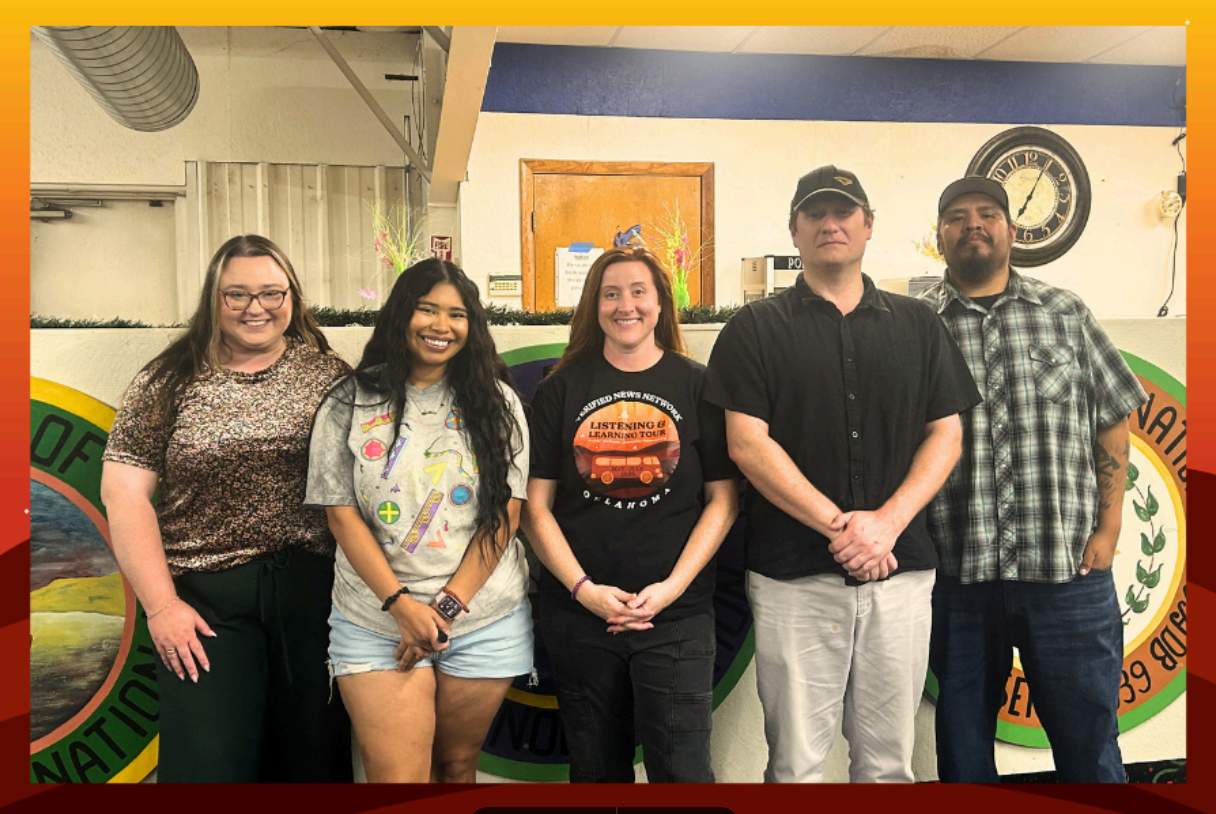
Each tour stop followed a similar structure: a welcoming meal, guided conversation, and a cultural activity. Local outreach was conducted in partnership with tribal and civic organizations, including the Eufaula Indian Community Center and other trusted community spaces. The sessions were recorded and summarized with the assistance of AI tools, then verified by human participants, allowing Crosswinds to accurately document local perspectives and identify trends across reservations.
We also shared the following stories and information with event participants:
Barriers persist for Native voters in Oklahoma
Native inclusion gains ground under Tulsa’s new leadership
Findings by Location
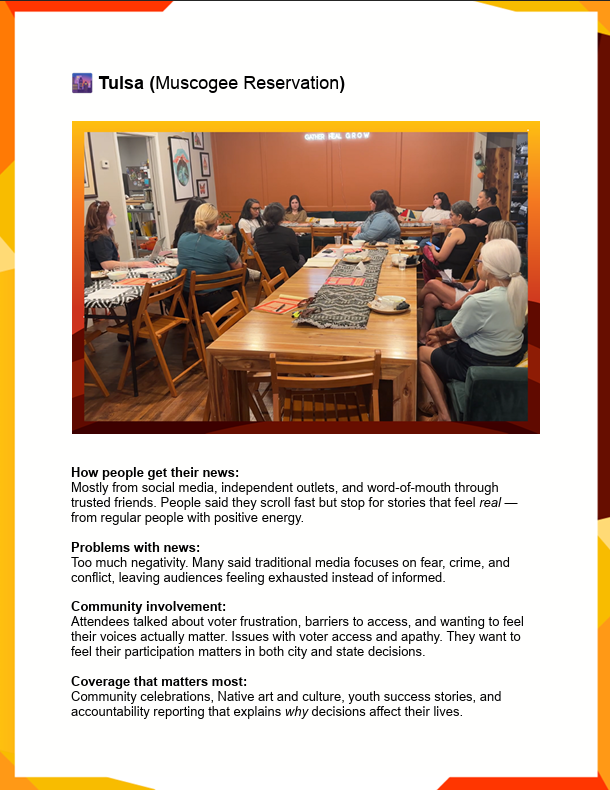
Tulsa (Muscogee Reservation – Tour Stop #1)
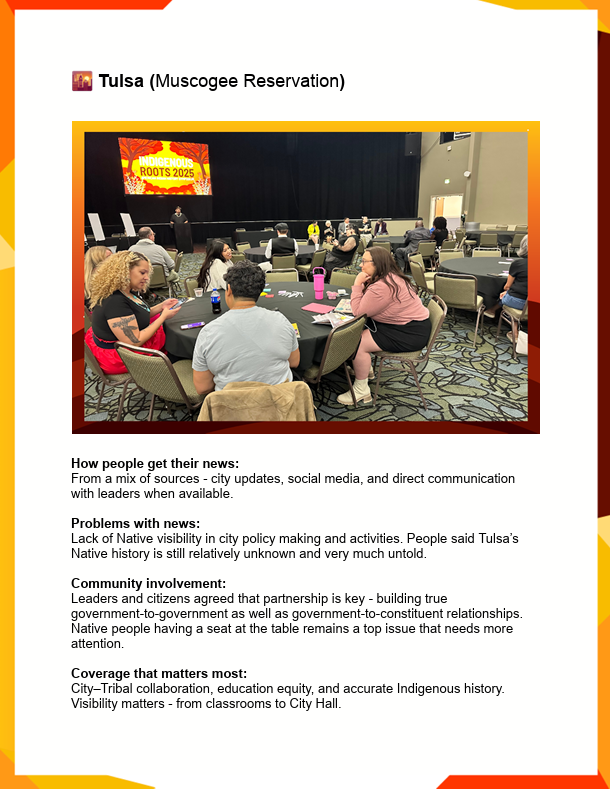
The opening stop established the tone of the Listening & Learning Tour - an intimate and open dialogue about what meaningful journalism looks like in Native communities. Participants discussed the emotional impact of fear-based news, the erosion of trust in mainstream media, appreciation for news updates via TikTok and barriers to participation in civic processes such as voting.
Attendees called for more uplifting journalism centered on community strength and creativity. The need for trustworthy, accessible information sources was clear, particularly among those who felt unseen by both tribal and local media systems.
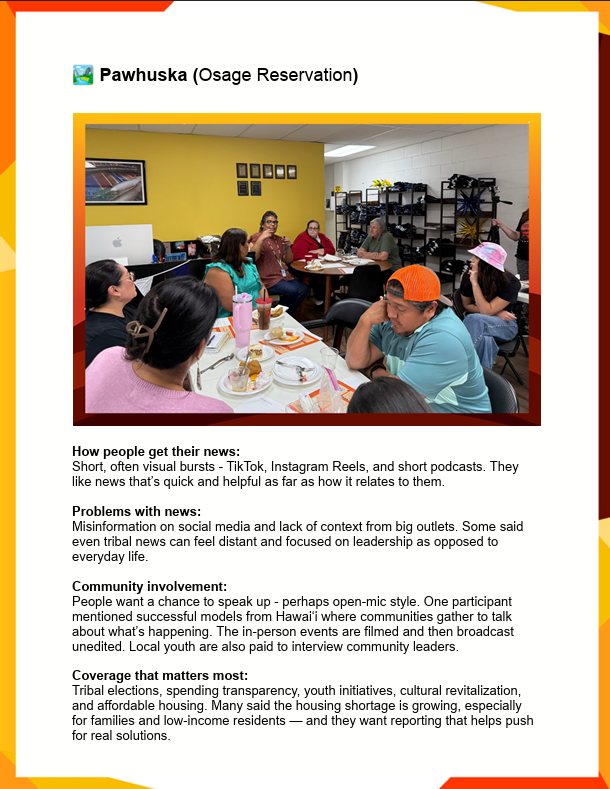
Pawhuska (Osage Reservation – Tour Stop #2)
Community members in Pawhuska also emphasized the role of social media in shaping how they consume news, and expressed concern about misinformation and lack of context in mainstream reporting. They highlighted the need for Indigenous-led digital storytelling that connects local issues to broader tribal and state policies.
Participants described a strong interest in journalism that incorporates culture, education, transparency in tribal government reporting, and youth engagement. Discussions also underscored the community’s frustration with barriers to affordable housing and local accountability - issues that benefit from independent Indigenous journalism.
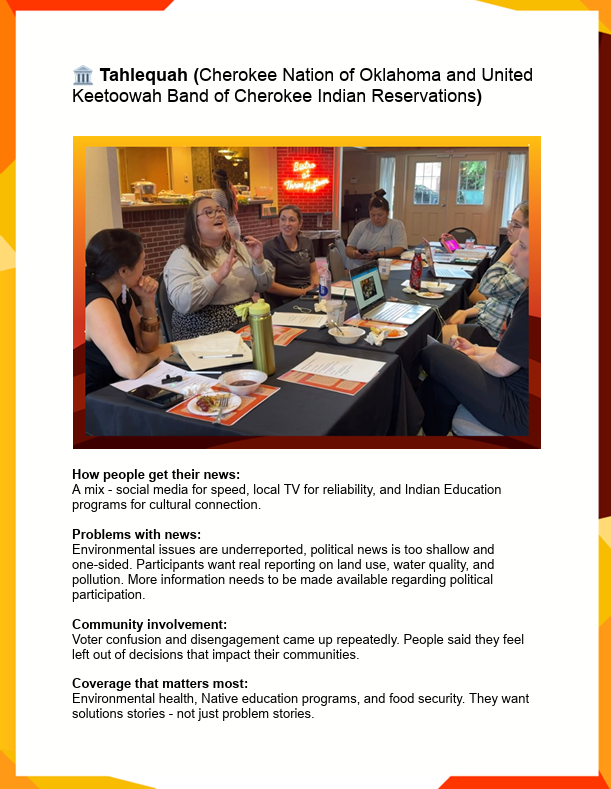
Tahlequah (Cherokee Reservations – Tour Stop #3)
In Tahlequah, participants discussed the intersection of environmental justice, political disenfranchisement, and cultural education. They described how generational differences shape trust in media, with younger citizens relying heavily on digital platforms while older generations continue to engage with traditional outlets.
The conversation revealed deep concern over pollution, land management, and voter access - and how limited or biased reporting on these issues undermines civic participation. Participants called for more in-depth coverage on environmental health and the impact of federal policy on Native life, and celebrated Indian Education programming.
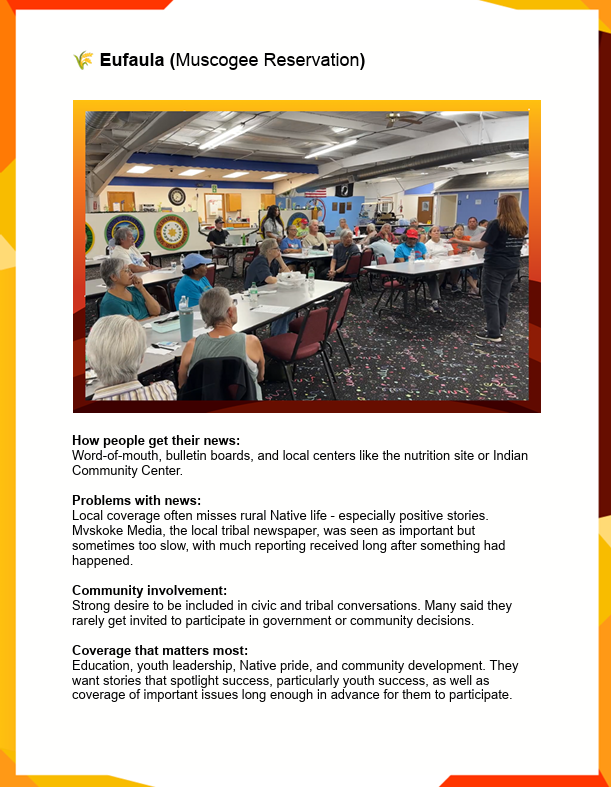
Eufaula (Muscogee Reservation – Tour Stop #4)
The Eufaula stop demonstrated the importance of local relationships and community outreach. By collaborating with the Eufaula Indian Community Center, Crosswinds successfully reached over 40 Native residents who are often underserved by both tribal and local media.
Participants described challenges in accessing trustworthy information and opportunities for adult education, entrepreneurship, and tourism development. Community members in Eufaula reported feeling left out and not represented in government and politics. The community members expressed a desire to be invited to participate in government meetings and events and to have a seat at the table.
Many expressed a desire for the achievements of Native youth to be showcased and for greater cultural inclusion in schools and government. The event also revealed how small, rural communities rely heavily on word-of-mouth networks, highlighting the need for more timely media strategies such as radio tailored to their environments.
Tulsa (Muscogee Reservation – Tour Stop #5)
The final tour stop in Tulsa centered on Indigenous inclusion in civic and municipal spaces. City officials, tribal leaders, and community members discussed how to strengthen government-to-government relationships and increase Indigenous visibility in city policy and planning.
Participants identified ongoing barriers to representation in education and local government, as well as opportunities to continue respect-based engagement between the City of Tulsa and tribal nations. This session reinforced that understanding local history and continuing community dialogue are essential to advancing Indigenous inclusion in Tulsa.
Key Findings - Online Surveying

Listening and Learning 2025 Survey
Of our 111 regular tour stop attendees, 15 took part in follow-up surveys online. While the digital response rate was modest, our in-person participation revealed something more meaningful - people were far more comfortable sharing their thoughts face-to-face than through a screen. Still, our first online survey did reveal some key findings:
Age: Most respondents (26.7%) were 35–44 years old, or 65+ (26.7%) with others between 18–24, 25- 34 and 45–54. (all 13.3%).
Gender: Overwhelmingly female respondents.
Location: Concentrated in northeastern Oklahoma, including Tulsa (74112), Jenks (74037), and Eufaula (74432).
Indigenous Identity: 93% identified as Indigenous.
Tribal Affiliations Represented: 66% Muscogee (Creek), 12% Seminole, 6% Choctaw, 6% United Keetoowah Band, 6% Cherokee, 6% Osage, 6% Laguna Pueblo, 6% Navajo (Multiple respondents represented multiple tribes)
Household Income: The majority reported annual household income between $30,000–$74,999, indicating primarily working- to middle-income households. A smaller share reported $75,000–$99,999 or higher, showing moderate income diversity across participants.
Main Sources of Information: Social media (Primary) news source was Facebook, followed by Personal networks of Family and friends and Local Media consisting of Local news websites and newspapers
Preferred Formats: Most respondents said they prefer watching or listening to the news, finding it more accessible and easier to retain. A few prefer reading because they can go back and see if they missed anything.
Sharing Patterns: Respondents said they generally share content from verified local outlets or trusted network sources, even when discovered on social platforms. A few participants reported sharing news from Facebook.
Top Topics Participants Want More Coverage On:
Culture (the most common response) - Respondents want more stories honoring Native culture, heritage, and community traditions.
Public Health - Especially mental health, access to care, and wellness programs.
Jobs & Local Economy - Economic opportunity and workforce development.
Youth Development & Education - Childcare, schools, and youth empowerment.
Environment & Local Government - Environmental stewardship, accountability, and civic transparency.
Participants consistently emphasized a desire for solutions-oriented reporting and community-specific coverage that reflects Indigenous perspectives.
Relating to Community Involvement:
Voting - Nearly all are registered voters and have participated in recent tribal, local, state, or federal elections.
Barriers to Participation - Respondents voiced concerns about limited information about local meetings and how to reach officials, time constraints for working families and perceived exclusion or lack of follow-up by government entities as barriers to participation.
Impact of Historic Injustice - 80% of respondents said historic injustice influences their community involvement. The rest said they were not sure if it does or not. Many referenced colonial systems and voter suppression as ongoing barriers that discourage full participation and trust.
Participants said they would be more civically engaged if:
There were better communication and access to decision-making spaces, visible, meaningful change followed community feedback, opportunities existed for leadership training or “train-the-trainer” advocacy models, and they were included early in conversations about policies and issues that directly impact them
Additional Insights:
Respondents described our in-person listening sessions as "informative".
The majority are open to one-on-one interviews and joining a Crosswinds News Advisory Board, showing strong potential for increased engagement.
Listening and Learning 2025 Post-Tour Survey
27% of our in-person event attendees registered online ahead of our event. Of these just one person took our post-tour survey online to date, but their responses were encouraging.
After attending our Listening & Learning Tour, the respondent said:
I feel somewhat more positive about being politically engaged.
I am somewhat more involved in my community.
My awareness of opportunities for involvement has significantly increased.
I view community and political involvement somewhat positively.
“Thank you for this opportunity and looking forward to more informational discussions.”
Looking Ahead
Thanks to a new partnership with Listening Post Collective and Oklahoma State University, we are launching an expanded survey of Indigenous residents living in Tulsa County based on survey questions developed for the Listening & Learning Tour. We look forward to sharing those results in December 2025!
Best Practices for Engaging Native Communities

Over the course of the Listening & Learning Tour Across Northeastern Oklahoma Reservations, we have identified what we believe are the best practices for organizations wishing to engage with Native American communities.
Best Practice #1 - Partner with Trusted Native Community Leaders
Collaboration with respected community members or organizations is essential to building credibility and turnout. Take the case of Eufaula , a small rural community on the Muscogee Reservation. This community told us they do not receive much news coverage or attention. When we decided to hold an event there, we contacted the Eufaula Indian Community Center. Their community chair advocated for our meeting and made sure people attended, ensuring our most successful community dialogue event to date. On the opposite end of the spectrum was our Cherokee tour stop. We could not forge a relationship with a strong community ally for our Tahlequah stop and this event also happened to be our lowest attended event, though we did still receive high quality feedback from those who showed up.
Best Practice #2 - Identify and Work around Cultural Calendars and Ceremonies
Scheduling around tribal events and ceremonies ensures participation and demonstrates respect. We tried to do this as much as possible during the tour, but there were many things we learned along the way. For instance, we knew that Osage ceremonial dances took place in June, so we worked around them. We knew summertime is powwow season, so we tried to plan around different powwows, and we knew that July is Green Corn ceremony time for a lot of Muscogee ceremonial grounds, so we tried to work around those as well. On the new learning side, we didn’t realize how heavily involved a lot of our target audience was with stickball, a traditional Native American sport, of which many tournaments are played during the summer. Our Cherokee tour stop took place in a college town, and while we were in contact with community connectors, many were educators or students that had left Tahlequah during the summer and thus were not around to attend.
Best Practice #3 - Lean Into Underserved Areas (and Connection is a Plus)
Underrepresented communities, especially those in rural areas, value intentional presence and continued connection over one-time outreach. Eufaula was a good example of the importance of spending time in an area that does not get a lot of attention. Our team found that Native community members appreciated the opportunity to engage with an organization that wants to serve them and their information needs. People were eager to share about what they feel is needed in terms of news coverage and information and hopeful about when we would be returning. They were very appreciative that people were taking the time to listen to them when they have felt ignored for a long time. Crosswinds News President and CEO Kelly Tidwell (Muscogee and Cherokee) also has ancestral ties to the area. Communicating that upfront as well as providing insight into the reasons why we work to support Native voices helped establish trust and kickstarted honest and open conversation about community experiences and unfiltered emotions.
Best Practice #4 - Prioritize Cultural Identity through Activity
Throughout the Listening & Learning Tour, one of the most consistent lessons we learned was that Native community members want to see their culture prioritized. Every respondent of our online survey said they wanted more coverage of culture. At each stop, Crosswinds made it a priority to include a hands-on cultural activity connected to the reservation we were visiting, led by a community member of that tribe. Participants made gourd necklaces, watched a moccasin-making demonstration, and created corn husk dolls while learning the traditional stories behind them. These shared cultural experiences created connections that encouraged openness and deeper dialogue well after the formal discussion was over. Outside of our tour stops, we have seen an increase of activities such as beading circles serving as both cultural practice and social space for deep, meaningful conversation, inspiring us to consider focus groups where cultural activities take place during the entire conversation, as opposed to just at the end.
Recommendations and Next Steps

The Listening & Learning Tour revealed both similar and unique news needs of Native community members across northeastern Oklahoma reservations. To respond to these findings, Crosswinds recommends the following actions:
Recommendation #1 - Invest in Local Native Community Journalism
Fund and expand initiatives like StoryKeepers, which train and employ Native storytellers to produce local journalism rooted in community knowledge. Explore other ways of increasing timely news coverage, such as radio broadcasting in rural communities.
Recommendation #2 - Support Community Connectors
Strengthen collaboration between tribal, grassroots, and media organizations to support culturally informed reporting and increase community involvement.
Recommendation #3 - Support Youth Engagement and Education
Expand programs that teach journalism, media literacy, and storytelling to Native youth, strengthening identity, encouraging pride, advancing critical thinking, and increasing community involvement.
These steps will help bridge the gap between underrepresented Native communities and the information systems that serve them. The findings from this tour demonstrate that investment in Native-led media not only strengthens trust and representation but also supports community involvement, education, and intergovernmental collaboration across Oklahoma and Indian Country.
Addendum: Cultural Series

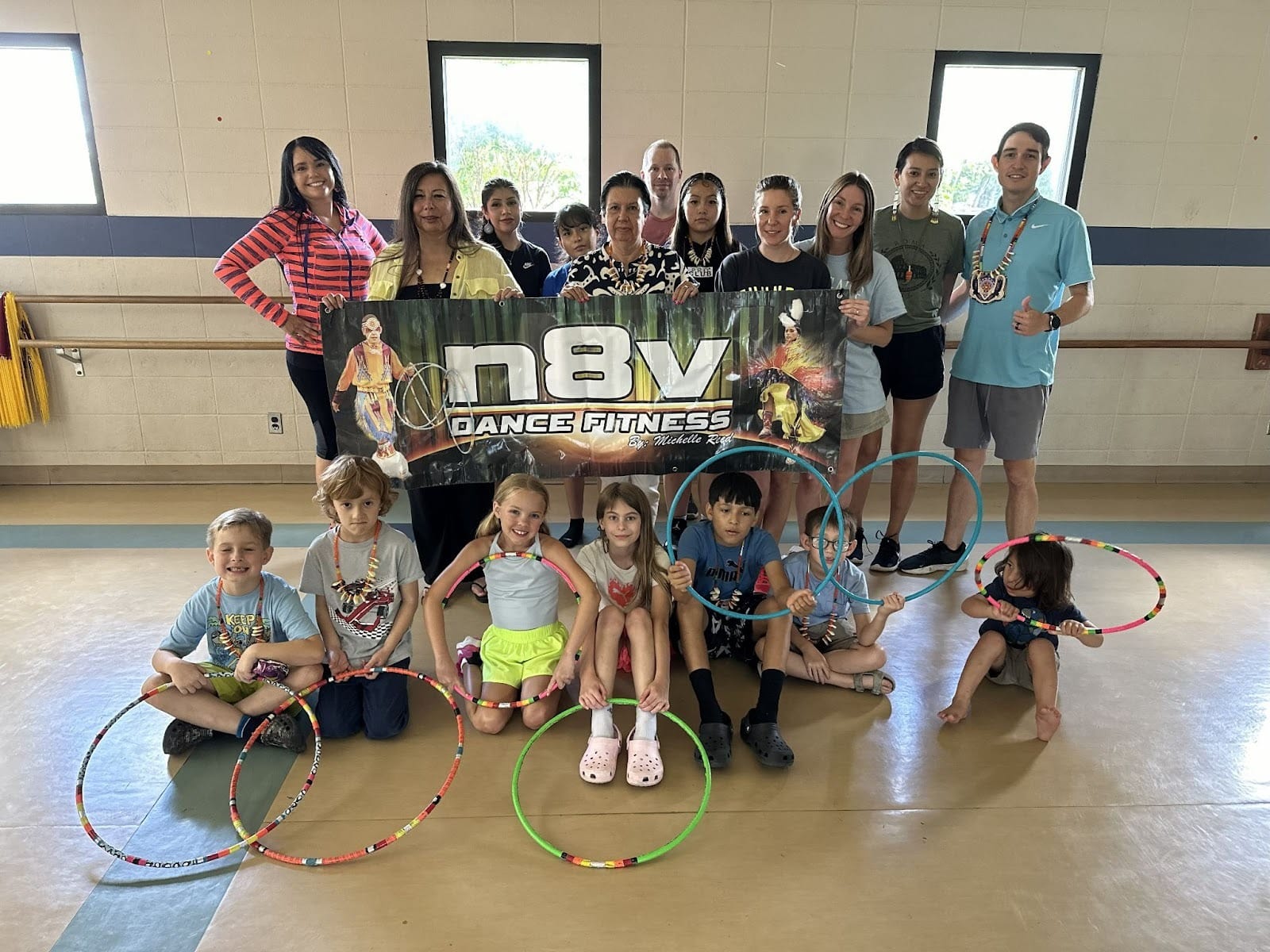
In June 2025, midway through the Listening & Learning Tour, Crosswinds hosted a Cultural Series event that drew 131 participants, making it the largest engagement of the project. The series celebrated Indigenous art, history, and storytelling through interactive exhibits and performances, providing a powerful space for cultural exchange and visibility. We also talked about past and present-day issues relating to Indigenous news and information and surveyed our community members about cultural activities.
This event was an experiment in influencer partnership, levering influencer following to advance the Native-focused work we do in the Tulsa area. The turnout highlighted the community’s appetite for culturally grounded events, particularly those relating to Native dance, but also those that educate and heal, reinforcing the need for continued investment in Indigenous-led journalism and community programming.
Read More Here: Cultural educators empower Native communities through dance