McCall pledges to restore relationships with tribal nations if elected governor

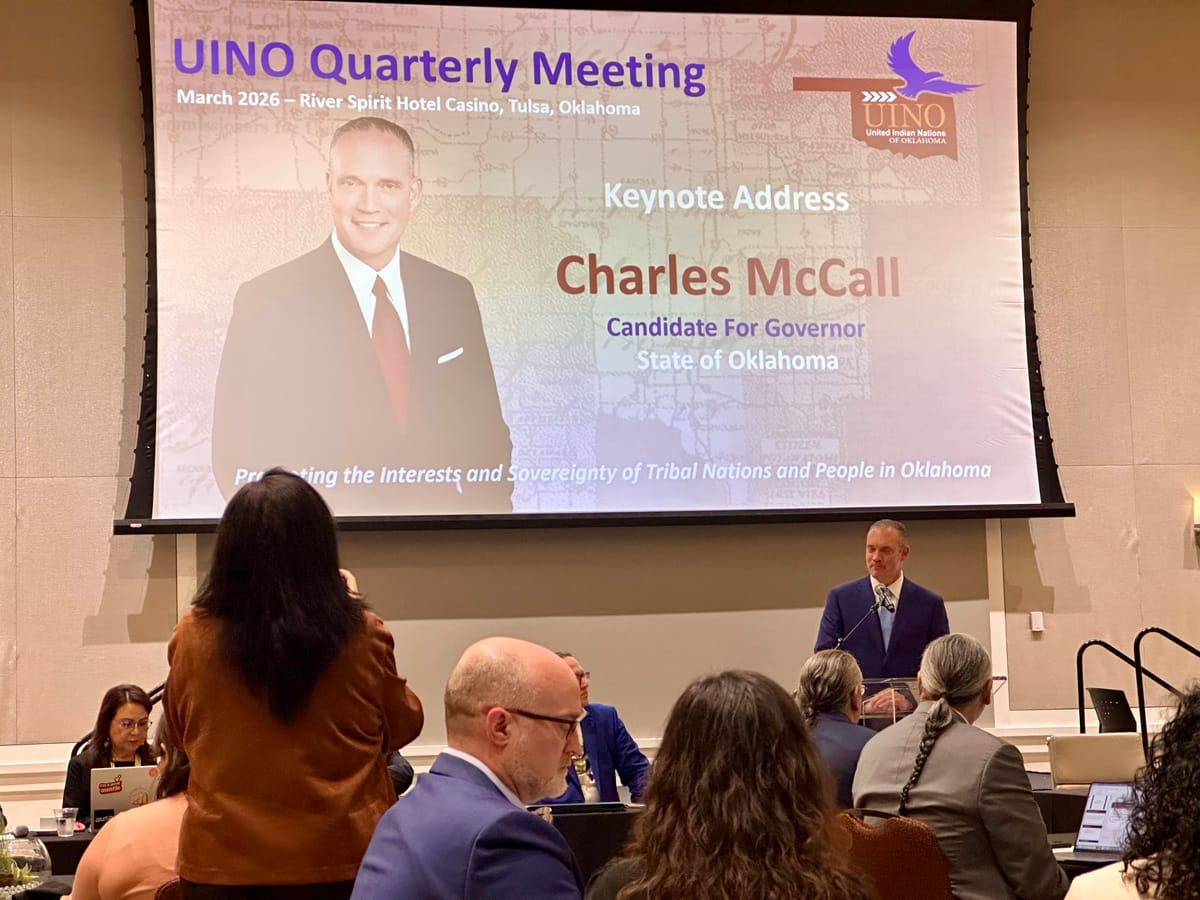
(TULSA, Okla.) This November, Oklahomans will elect a new governor to replace incumbent Kevin Stitt. One candidate, Charles McCall, pledges that if elected, he will restore relationships between the state and its tribal nations.
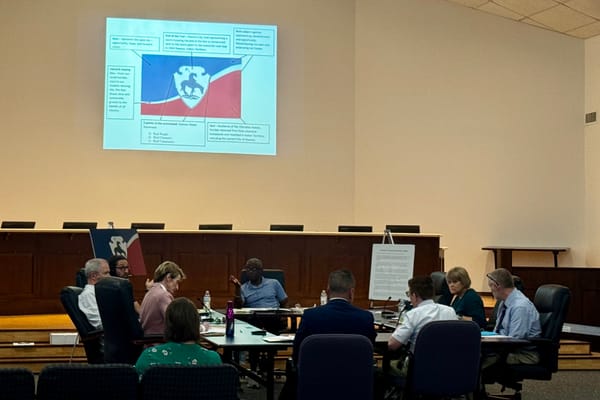
Republican candidate and current Oklahoma House Speaker Charles McCall gave the keynote address at the United Indian Nations of Oklahoma (UINO) quarterly meeting on March 10. He spoke about his campaign platform and how he would foster relationships with tribes if elected.
McCall reflected on his work with tribal nations, dating back to his days as mayor of Atoka, Oklahoma.
“We had experienced one of the largest projects in the City of Atoka, but the city did not have all the money to finish the project,” McCall said. “It was the Choctaw Nation that came in and said, ‘Mayor, we're gonna help you finish this project. We know how important it is to your community of Atoka, but also to the Choctaw Nation.’”
McCall said support from the tribes continued when he became Speaker of the House in 2017 amidst severe economic challenges in the state.
“In our darkest times and in my darkest days as Speaker of the House, the tribal nations showed up to help,” McCall said. “They offered solutions and brought solutions that could actually help the State of Oklahoma climb out of the deep economic hole that they were in.”
McCall acknowledged that, under Stitt’s administration, the state’s relationships with the tribes have been “probably at the poorest that it has been in our state’s history.”
“The biggest disappointments of the last eight years are the missed opportunities between the State of Oklahoma and the tribal nations,” he said.
Stitt has had tense relationships with tribal leaders. In 2023, Stitt vetoed extensions on tobacco compacts and motor vehicle license compacts. Last summer, he criticized a settlement between the City of Tulsa and Muscogee Creek Nation that gave the latter jurisdiction over crimes committed by tribal citizens within the reservation’s boundaries, saying it was tantamount to Tulsa becoming “a sanctuary city for tribal members engaged in criminal activity” and filing a motion with the Oklahoma Supreme Court to stop it. (A federal judge dismissed that motion earlier this month.)
Last month, tribal leaders across Oklahoma reacted to Stitt’s last State of the State address. Muscogee Nation Principal Chief David Hill said, “The only good thing I can say about the governor’s comments regarding tribal matters is that they are his last in the Oklahoma people’s house.”
McCall told UINO attendees that if elected governor, he would have a better relationship with tribal nations.
“I will change that,” McCall said.
McCall stated that his plan for restoring the strained relationships includes open communication. “You always have my pledge that I will reach out to your tribal leaders, your nation leaders, and we'll have a conversation,” McCall said.
McCall told the audience he hopes future relations between the state and tribes will serve as a model for other states.
“I want to see them reporting on the State of Oklahoma and the tribal nations working so well together and creating such great synergy and prosperity in the state that the rest of the states want to be like the State of Oklahoma,” McCall said. “I think we have that opportunity.”
Governor Reggie Wassana of the Cheyenne and Arapaho Tribes raised concerns about Republican candidates who campaign on allegiance to President Trump rather than presenting a clear platform for Oklahoma.
Wassana addressed McCall, saying that he would like to see candidates share their own platforms and plans for Oklahoma, rather than just aligning with Trump.
In response, McCall said, “I appreciate [Trump’s] focus on an America First agenda. I'll tell you, as the governor of the State of Oklahoma, I'm focused on Oklahoma. We will have an Oklahoma-first agenda, and that will include the tribal nations of the State of Oklahoma.”
Other attendees mentioned the need to teach Oklahoma’s true history and the role of the tribes, so that state-tribal relationships will be better understood. McCall agreed.
Oklahoma’s gubernatorial primary will be held on June 16, with a runoff between the two Republicans who receive the most primary votes scheduled for August 25. The general election will be held on Tuesday, November 3.
A total of thirteen candidates have filed, including nine Republicans, one Democrat and three Independents.
Crosswinds News will continue to cover the race and its impacts on Indian Country.