More than a game: Native All-American Showcase builds leaders on and off the field
(MINNEAPOLIS, Minn.) What began in 2021 as a small pilot program to promote diversity in the NFL has evolved into one of the most meaningful athletic showcases in America.
The Native American Athletic Foundation (NAAF), in partnership with the Minnesota Vikings and the NFL, will host the annual Native All-American Football Game on Sunday, Dec. 14, 2025, at U.S. Bank Stadium in Minneapolis.
The game brings together 70 of the nation’s top Native high school football players for a week of competition, leadership training and cultural pride. It is designed to empower young Natives to achieve new levels of success through sports, mentorship, and leadership to become leaders of character in their tribal communities.
This year’s event marks the fourth year of the partnership between NAAF and the NFL and the third time the Minnesota Vikings have hosted the game, following successful exhibitions in 2021, 2022 and 2024.
For the 2025 showcase, athletes representing 48 tribal nations will take the field inside one of the NFL’s premier stadiums. They hail from 21 U.S. states and Canada, and this year, 14 call Oklahoma home.
For many of these student-athletes, stepping onto an NFL field is a once-in-a-lifetime experience, one that NAAF’s executive director and chairman Michael Stopp said carries a deep emotional impact.
“When they walk onto a major league sports field, you can see it in their eyes,” Stopp said. “It changes them. They start to feel like they belong there. They begin believing, even if their sports career doesn’t continue. That moment stays with them and supports them in life. That’s the real value of this program.”
The game is only one part of a four-day camp that includes programming designed to provide mentorship, leadership development, mental wellness tools, cultural connections and college preparation.
This year, NAAF will partner with Success Beyond Game Day, led by Samantha Card, to introduce early-season identity and mindset development for athletes. This year’s student-athletes have met weekly via Zoom working on social bonding with one another and the psychology of athletes since early November in preparation for their arrival in Minneapolis.
“Samantha works with NFL teams and Division I athletes, and her message is powerful: Athletes need to understand who they are beyond the sport,” Stopp explained. “The kids have shown up every week, engaged and eager. That tells us how much this program means to them.”
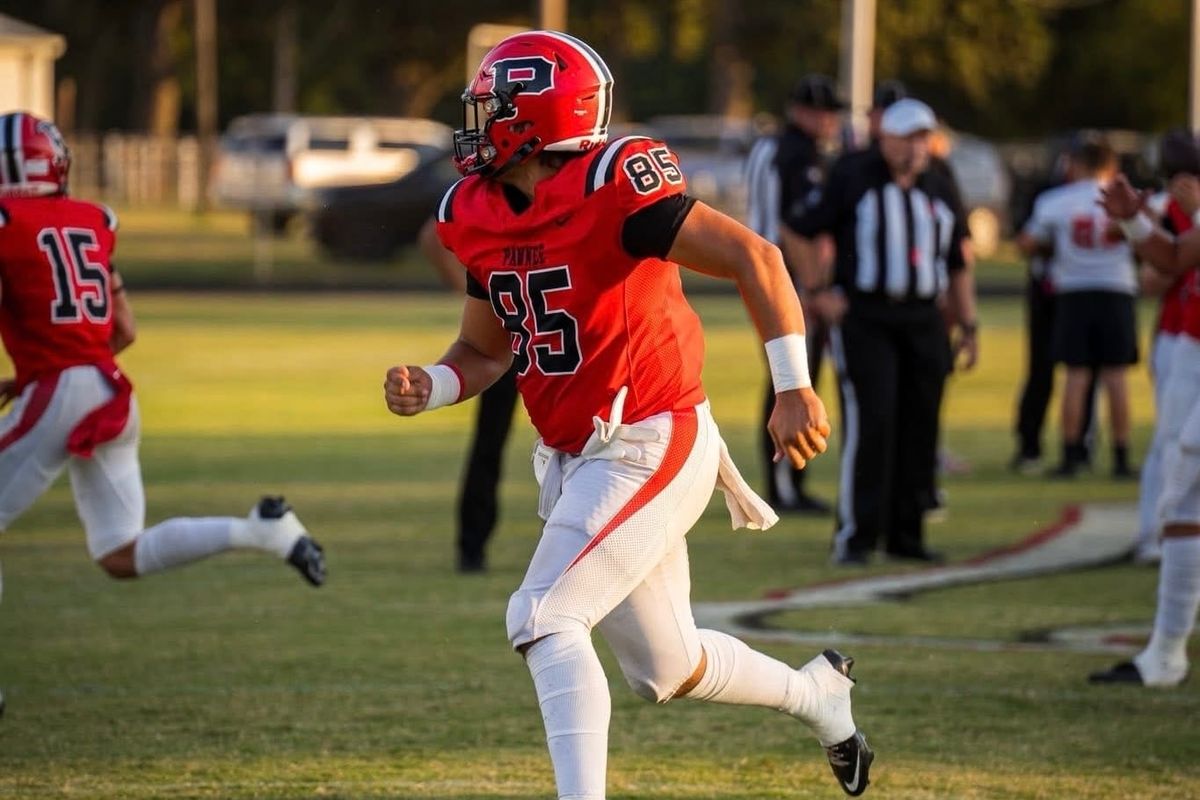
For student-athletes like Aiden Jones, representing the Pawnee Nation of Oklahoma and his family makes the experience even more meaningful.
“It’s a huge honor,” Jones said. “My family loves seeing me continue playing football, and they’re proud I get to represent the Native side of who I am. Playing in an NFL stadium inside a dome like this feels like a dream.”
Jones hopes to learn from the former NFL athletes who will serve as coaches and possibly catch the attention of college recruiters. Beyond the field, he is also eager to build relationships with other Native athletes from across the country.
“We’ve been meeting on Zoom every week, getting to know each other,” he said. “Meeting all these coaches and players from across Indian Country, that’s the best part.”
Jones’ experience reflects the program’s purpose: providing opportunity without limits. NAAF selects program participants competitively, evaluating video of their performance on the field, records of their academic achievement, and evidence to demonstrate their moral and ethical character.
The organization is intentional about ensuring a fair process.
“We don’t look at whether they’ve attended elite camps or traveling programs,” Stopp said. “Those often depend on a parent’s ability to pay. We evaluate raw talent, academics and who they are as a whole person.”
This year also marks an important expansion for Native girls in sports. On December 13, NAAF will host a Native Female Flag Football Clinic, part of a growing national effort to elevate women’s flag football.
“Representation matters,” Stopp said. “Native athletes, boys and girls, are part of sports history and a part of the sports future. We want the entire nation to see that.”
The 2025 game will be broadcast through First Nations Experience (FNX), expanding visibility across Indian Country.
“We want as many people as possible to watch,” Stopp said. “Even if we work directly with 70 kids, this program can inspire thousands. Mentorship is at the core of who we are, and we want every Native youth to know there’s a place for them in this world.”
As preparations for the 2025 Native All-American Game continue, Stopp hopes tribal communities nationwide tune in and support the athletes showcasing their skills on the national stage. Opportunities like this are rare for many Native athletes, especially those from rural or reservation communities where access to elite training, recruiting exposure, or professional mentorship is limited. For most participants, this program marks the first time they’ve worked directly with former NFL players, national level coaches, and sports psychology professionals. The camp creates a powerful space where athletes see themselves in every coach, speaker, and teammate showing that success in sports and education is not only possible but within reach.
“It’s about the kids watching at home,” he said. “Seeing Native athletes in an NFL stadium with former NFL players as coaches, seeing themselves on that field. That creates hope and possibility.”