Data center concerns on tribal land in Oklahoma draw national attention

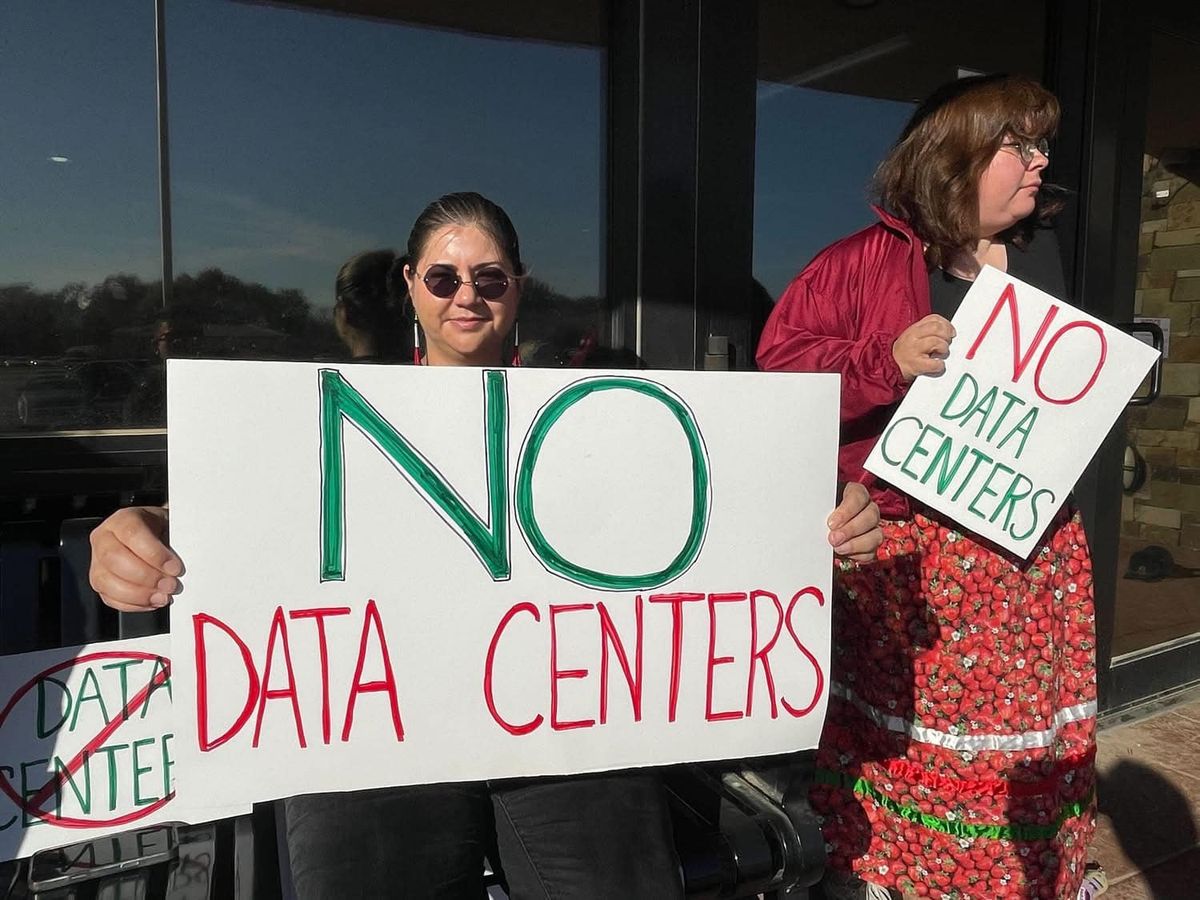
(MVSKOKE RESERVATION) As artificial intelligence (AI) continues to expand across the United States, Indigenous advocates in Oklahoma are drawing national attention to the environmental and sovereignty risks tied to the data centers powering that growth.
Data centers are needed to power AI platforms used by businesses and individuals, with this infrastructure requiring electricity and water resources. According to the Pew Research Center, data centers accounted for about 4% of total U.S. electricity use in 2024, with demand expected to more than double by 2030. Some estimates suggest that large AI-focused facilities can use as much energy as tens of thousands of homes, while projections indicate U.S. data center water use could reach tens of billions of liters annually by the end of the decade.
Efforts to bring data centers to Tribal Nations have already begun, including the Muscogee (Creek) Nation Reservation.
In August, the Muscogee (Creek) National Council introduced a bill to establish a technology park and innovation park, known as the “Mvskoke Tech Park”.
The legislation, which would have allowed for a data center to be built on reservation land meant for food sovereignty (Looped Square Ranch), alarmed Muscogee citizens including Mackenzie Roberts, an employee of Muscogee Nation Center for Victim Services.
Roberts along with Jordan Harmon, a policy specialist for the Indigenous Environmental Network, organized town halls and virtual events to educate people about the proposed project.
Their efforts have been credited with causing the legislation to fail and were mentioned recently by Time Magazine.
“People were worried about their water, worried about their land and their soil and their way of life,” said Roberts. “They were particularly impassioned about food sovereignty. They were worried about exchanging sustainable agriculture for a data center.”
Roberts said concerns at the townhall were also about what a data center would do to the wells in rural areas, as there are already issues with water delivery in some of those places.
In addition to the environmental concerns, Roberts said there were other pressing questions that people wanted answers to.
“They were asking, what is the land council doing, who's going to pay for the infrastructure development, how much do we need to invest in the infrastructure to be able to make a data center able to work on that land,” stated Roberts.
For Roberts, the prospect of data centers on tribal land is also a sovereignty issue.
“Data center development is like another iteration of American imperialism and colonization,” said Roberts. “We have already been historically deemed as sacrifice zones.”
Protecting valuable resources on tribal land and keeping life sustainable for people living in tribal communities are main drivers for Roberts’ advocacy.
“If you look at where Indigenous people live and you look at our reservation lands, you know, I'm not talking specifically about urban places. I'm really talking about our rural lands,” said Roberts. “There are food deserts everywhere. We have issues with water delivery already.”
Her advocacy had led to Roberts advising tribal members in other Native communities where there are concerns about data center development, including being part of the “Stop Data Colonialism” coalition.
“They've been reaching out to our coalition left and right,” said Roberts. “We don't insert ourselves, necessarily. If they ask us for help, we'll support them.”
In March, Roberts and other advocates were invited to help lead a town hall in the Seminole Nation regarding data centers. The Seminole Nation Tribal Council ended up passing a moratorium on data centers on its land.
For Roberts, the advocacy work and passion for educating others about potential impacts of data centers on tribal land is something she says others can take up by reaching out to their own network.
“Think of a hand,” Roberts said. “You are the palm, then you have those 5 fingers, you reach out to 5 people. Don't even have to be 5 people, but a couple people that you know that you can count on and then ask them to reach out and do the same, because that's really the essence of what we did.”
To learn more about how Roberts and other Indigenous advocates educate people about data centers, visit “Stop Data Colonialism.”