Surviving the MMIP Crisis: Rebuilding a Life After Decades of Abuse and Trafficking

WARNING: This story contains discussion of sexual assault, trafficking, abuse and violence.
(TULSA, Okla.) May is Missing and Murdered Indigenous Persons (MMIP) Awareness Month. Behind many cases of violence impacting Native women and girls are deeper cycles of abuse, trauma, sexual assault and exploitation that often begin in childhood.
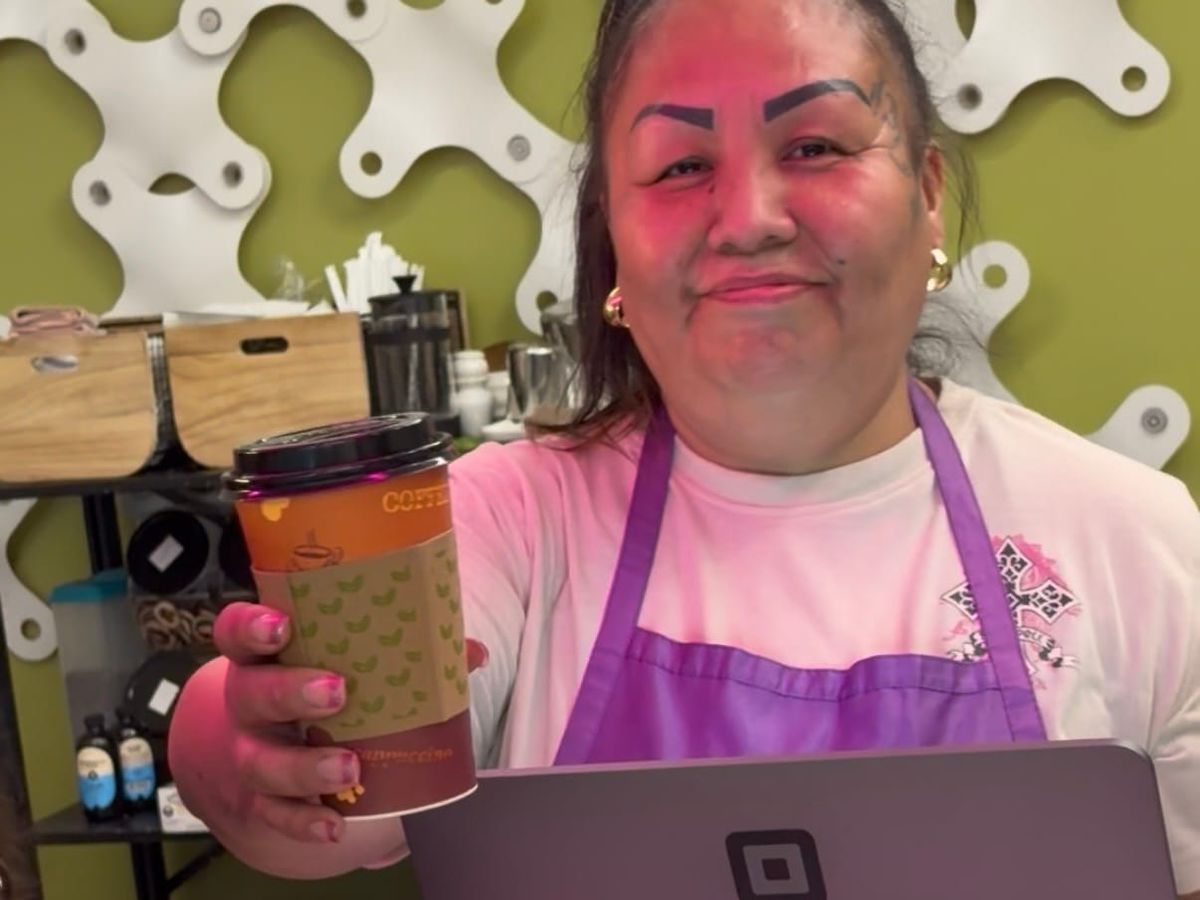
Ronna Stone, a member of the Chippewa Cree Tribe in Montana and dual citizen of the United States and Canada, survived decades of abuse, trafficking, substance use disorder, incarceration and loss. Today, she’s sharing her story in hopes it can help others understand how these cycles begin, and how healing and rebuilding a life is still possible.
According to the National Indigenous Women’s Resource Center, one in three Native women will experience sexual assault in their lifetime and Native women are 2.5 times more likely to experience sexual assault compared to non-Native women.
Stone is a survivor of sexual assault and sex trafficking that started when she was a child. She was just six years old when a family member sexually assaulted her.
Speaking up about the assault did not help.
“I went to my parents and they called the police and stuff, and it turned into a big ordeal,” said Stone.
But, Stone said, ultimately nothing came of it.
Stone’s dad went to prison for drug crimes off and on for several years, and she says he was abusive as well. She recalls her mother smuggling drugs to him in prison in her diaper.
When Stone was 12, her mother died, making her even more vulnerable to abuse.
Following her mother’s death, Stone says she went to live with her grandparents. One night she was heading home from a party she had gone to with her cousin when a man followed her home.
“I was kidnapped by this guy that followed me home,” said Stone. “He crawled through the window and he sexually assaulted me. And later on, he came back and he kidnapped me. I was human trafficked from 12 to 19.”
Stone says she tried to speak up about what was happening to her but it only led to physical retaliation against her family members. Going to law enforcement did not help much either.
“Everybody was scared of him,” said Stone. “Nobody wanted to even get involved. Nobody would help me. The police came all the time. He went to jail, they let him back out. They just kept letting him out and he would come and find me.”
During those seven years, Stone says she was locked in a room and physically abused as well. As a result of the rape, she became pregnant with her son.
“I got pregnant when I was 12, and when I was 13, I had a baby,” said Stone. “Nowadays, I feel like they would do something about it if a 13-year-old person came into the hospital pregnant and had a baby, right? Back then, nobody did anything about it.”
Stone had another child when she was 15, this time a daughter. She says her children gave her a reason to live through her unbearable circumstances.
“They stayed with me in the room too, and I feel like that's what kept me alive through all of that,” said Stone. “And I just couldn't be away from them after that. I was so attached to them because they were my only contact.”
At 19, Stone says she escaped the captive situation she was in in Montana and ran to Minot, North Dakota. Stone says her trafficker later found her again in Canada and shot her.
“I was in a closet with a baseball bat,” said Stone. “He found me again, but he ended up shooting me. So I was in a coma for seven months, eight months, and I had to learn how to walk all over again.”
Stone says the man later served 20 years in federal prison. Her father took her son and her aunt helped get her daughter out of the situation.
Stone later went to Milwaukee, Wisconsin with her cousin where she says she met some men from Mexico who were in the United States illegally. She later moved to Tulsa with them.
“I just basically became illegal with them,” said Stone. “And for the next seven years, I just stayed inside and I hid.”
Things took a turn after the men from Mexico were deported and Stone found herself on the wrong side of the law. Stone says false impersonation charges led to her spending five years in federal prison.
“I lied about my name,” said Stone. “After I got away from that person, I changed my name and I just didn't contact anybody that I knew. I didn't contact my family. I didn't contact anybody because I was really scared.”
After being released from prison, Stone went to Domestic Violence Intervention Services (DVIS) in Tulsa where they were going to help her change her social security number and name. Stone says she was supposed to go to Seattle to do this but ended up not going and instead became involved with drug dealers and gang members.
“I was like, they're gonna protect me more than the police can, right?” said Stone. “They're gonna protect me more than the police can because the police have never protected me. They've never done anything to help me.”
“It came to the point where I felt so safe in the worst areas,” Stone continued. “I felt like, well, as long as I'm making money selling a lot of drugs, people will do stuff for you.”
Stone later ended up back in prison on drug trafficking and gun charges. Not having to worry about her trafficker finding her made it easier for her to live behind bars.
“Prison and jail was, I just felt safe there,” said Stone. “It was where I was safe. So I didn't mind being there.”
But, in the years between going in and out of prison, Stone says both of her children died. Her son was shot and killed in 2012 and her daughter was killed by a gang of girls in 2024.
“I did everything in my power to leave and get away just so my kids could stay alive and they still ended up passing away,” said Stone. “So that was the worst part and having to live with myself.”
Stone says she has not heard from her trafficker in a few years, mainly because she has stayed off social media, but she is trying not to live in fear now.
“That kind of ruined my life, being scared of him all the time,” said Stone. “Because I know I didn't want to go through all the stuff that he put me through.”
One of the hardest parts of Stone’s experience has been acknowledging that nobody helped her despite the danger she was in and the abuse she was experiencing.
“I was like a teenager,” said Stone. “I was a child. Why would nobody want to help me?”
Since being released from prison, Stone has been part of Inside Out Re-Entry Services. Recently, she has been working with Carabelle’s Legacy as part of the first “Belle’s Kitchen” cohort of 2026 and is grateful for a chance to rebuild her life.
The Belle’s Kitchen program supports justice-impacted women with hands-on culinary training, mentorship, and connections.
“My life has totally changed,” said Stone. “I got my ServSafe manager [certification]. I'm a chef. I got a new car. I got a job already waiting for me. I learned how to make roses out of food.”
She said she will be working at Donut Hole starting June 5.
“It's a really good fit,” noted Stone. “I’ve just been praying for God to put all the right people in places in my path to help me heal and to help me, it's okay to be happy, because I've never been really truly happy.”
Stone hopes other women and girls in similar situations will be encouraged by her story and know that it’s possible to build a better life.
“It feels like the pain is so bad it's gonna kill you,” said Stone. “And that's a hard thing to go through. But once you go through that you can move forward. I just feel like, that I know now that anybody could change if they really want it, if they want to put their mind to it.”
To learn more about Carabelle’s Legacy and the Belle’s Kitchen program, visit https://www.carabelleslegacy.org/belles-kitchen