Now Available: Native-Focused Tulsa County Information Ecosystem Assessment

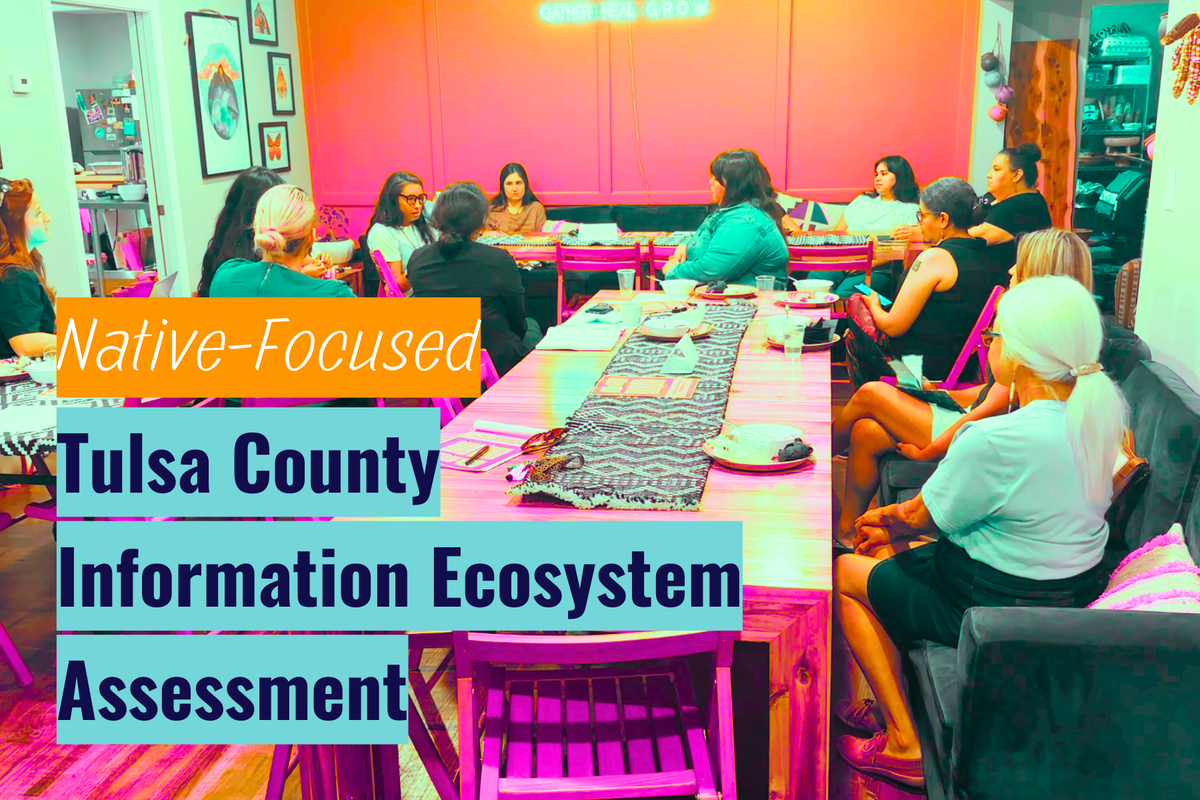
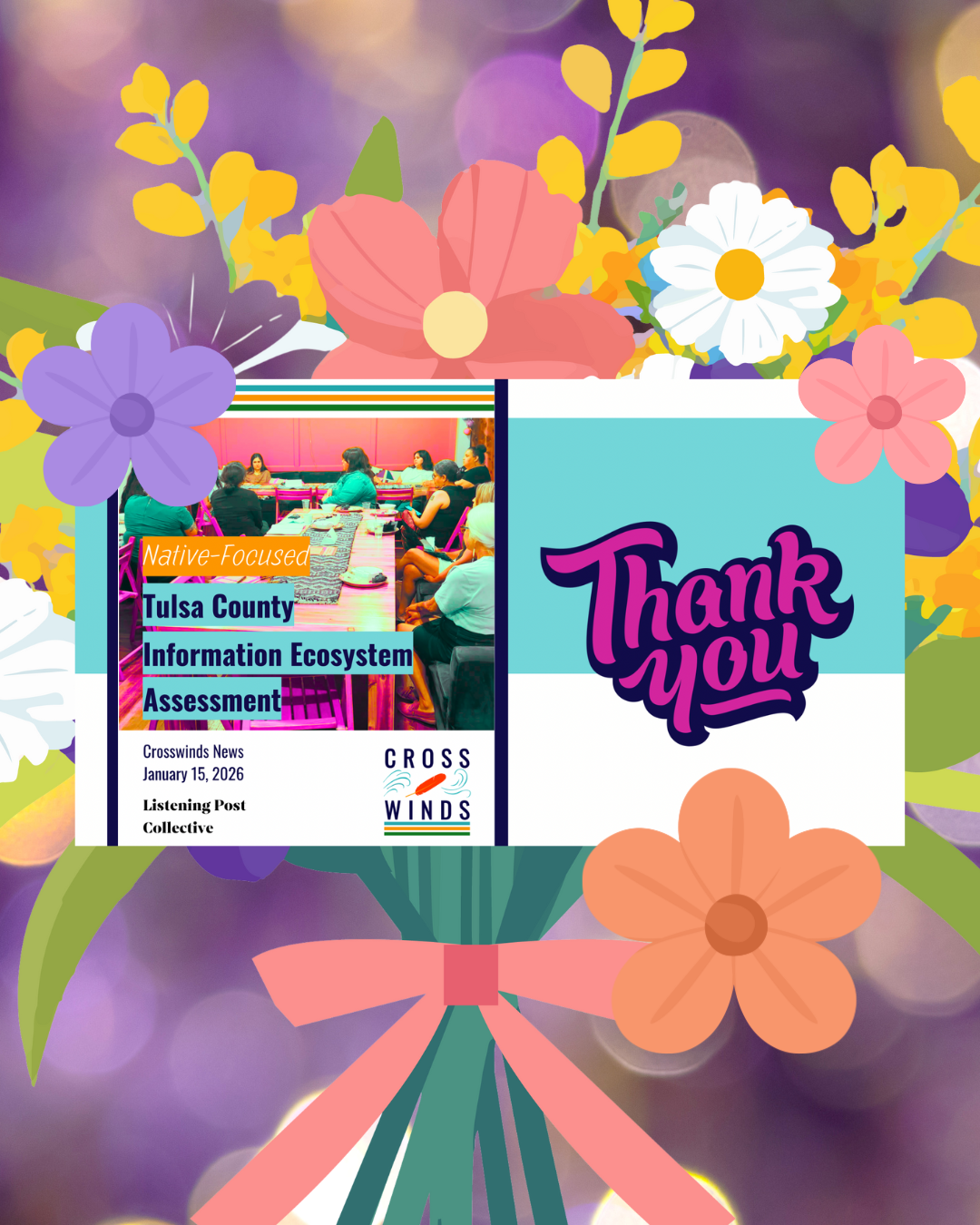
We’re excited to officially share Crosswinds News’ Native-Focused Tulsa County Information Ecosystem Assessment, a year-long effort grounded in listening, community dialogue, and data-informed insights.
This report reflects what Native residents across Tulsa County told us directly:
- How they access news and information
- Where gaps exist
- What’s missing when it comes to timely and community-relevant coverage
Through surveys, listening sessions, interviews, and a recent virtual Community Check-In, community members consistently emphasized the need for clearer pathways to get involved, stronger coverage of community events and culture, and more trusted, Native-led information spaces.
Additional summarized themes can be found here.
Importantly, the assessment takes a place-based, intertribal approach, recognizing that Native families in Tulsa County live, work, and engage across tribal affiliations, a reality that is often overlooked in traditional data and media systems.

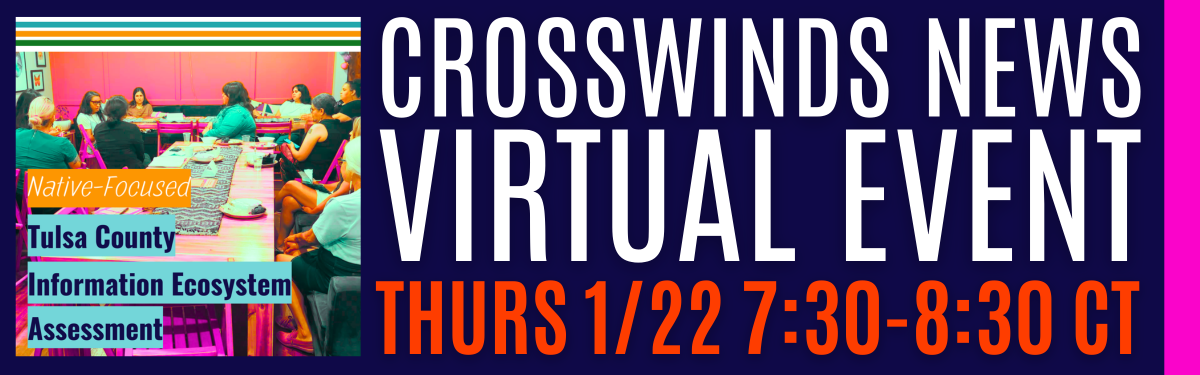
Crosswinds Community Check-in (Virtual Event)
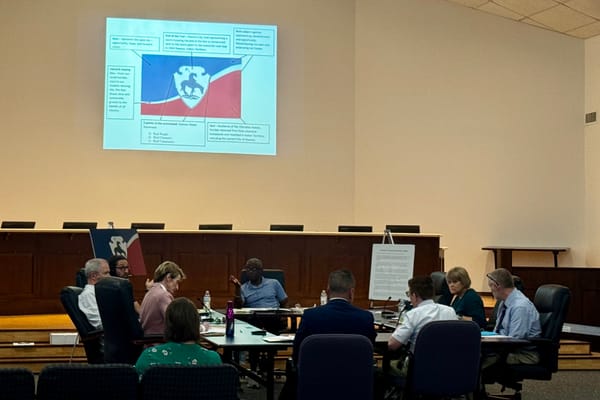
A virtual Community Check-In was held on January 22, 2026 to share findings from the Information Ecosystem Assessment and hear directly from community members. The conversation helped confirm what resonated, identify gaps, and guide how these findings will be used moving forward.
Feedback from virtual attendees strongly affirmed both the relevance of the findings and the need for Native-led, cross-tribal information work in Tulsa County. Attendees expressed validation, appreciation, and alignment with the assessment’s conclusions, while also offering insight into why this work matters at a lived, day-to-day level.
Validation of Findings as “Accurate to Lived Experience”
Attendees repeatedly stated that the findings matched what they see in their own families, peer groups, and communities. Several noted that nothing in the presentation felt surprising. Instead, it reflected realities they already feel but rarely see documented or acknowledged in data-driven work. One participant explicitly shared that the information “aligned with what I’ve read and experienced,” reinforcing the credibility of the assessment.
Strong Support for a Tulsa County, Multi-Tribal Approach
A key piece of feedback was appreciation for framing the assessment around Tulsa County as a shared, intertribal space, rather than limiting the work to a single tribe. One attendee emphasized that families in the area are deeply interwoven across tribes (Cherokee, Muscogee, Yuchi, and others), and that tribe-specific funding and data structures often fail to reflect how people actually live. The attendee explicitly stated they were “glad to see this kind of work happening” because it mirrors real community dynamics.
Recognition of Ongoing Data Gaps — Especially De-Aggregated Data
Virtual attendees acknowledged how difficult it is to find meaningful, de-aggregated Native data and expressed appreciation that Crosswinds is helping fill that gap. One participant noted they planned to engage more deeply with the demographic findings for their own academic work, highlighting the assessment’s value beyond journalism, as a resource for researchers, advocates, and community leaders.
Confirmation of Platform Realities Across Generations
Attendees reacted positively to discussion around Facebook as a primary information source, even while acknowledging generational tensions around platform trust. Feedback confirmed that, despite frustrations with social media, Facebook remains a practical tool for staying connected to community events, especially across generations. This reinforced the assessment’s conclusion that platform preference is driven by access and habit, not idealism.
Appreciation for Native-Led Framing and Community Accountability
Participants explicitly thanked the Crosswinds team for doing this work and encouraged Crosswinds to continue. Feedback highlighted that the assessment felt rooted in care, accountability, and community knowledge, not extractive research. Attendees expressed trust in Crosswinds’ role as a Native-led newsroom that listens first and builds from community input rather than imposing solutions.
Affirmation of the Virtual Format Itself
While not the central focus, attendees implicitly validated the virtual event format by engaging actively, asking questions, and staying through the presentation. One participant noted they had missed prior in-person opportunities due to travel or scheduling conflicts and appreciated being able to participate virtually, suggesting that virtual convenings expand access rather than replace in-person engagement.
What Virtual Attendees Said
- “It aligned with some of the things that I’ve read about and everything.”
- “I was glad to see this… because realistically, at least in this area, we’re all intermixed.”
- “I was happy to see this and was like, yes, other people are doing this type of work.”
- “You guys are doing some good work, so keep it up.”
This report is not an endpoint. It’s a foundation that will guide how Crosswinds News improves coverage and deepens community involvement in the months ahead. We look forward to continuing this great work- together!
Want to support our work? Donate! Or become a paid member today.