One Native Perspective: “This is a symbol that does not show the spirit of Owasso”
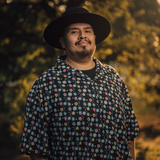

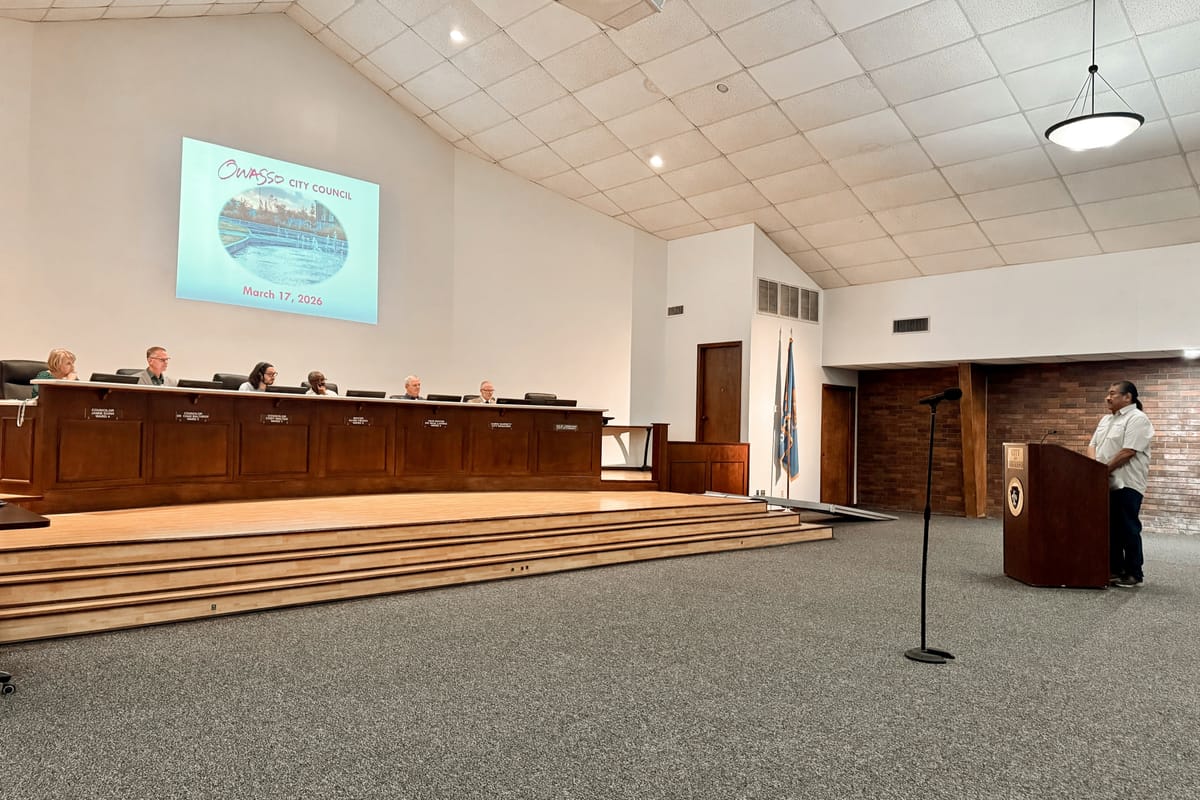
(OWASSO, Okla.) A community member spoke out against the proposed design for the City of Owasso’s first flag during Tuesday’s city council meeting, raising concerns about the use of Native imagery tied to the “End of the Trail” sculpture.
“Anything that shows any imagery, any depictions, whether it's mascots or anything that shows our Native American heritage in a bad light, I want to speak up about it and just give my opinion on what I think,” said David Bible (Muscogee and Hopi).
During the last three Owasso City Council meetings, Bible is the only person who signed up to speak about the proposed flag design.
“If it wasn't for the name of the statue, ‘End of the Trail,’ which is what Owasso means in the Osage language, then it probably wouldn't be symbolized and be put onto their flag and onto their city seal,” Bible said.
Bible said Owasso also means ‘owl’ in Muscogee, and back in the 1950s, that was the city’s mascot: the Owasso Owls.
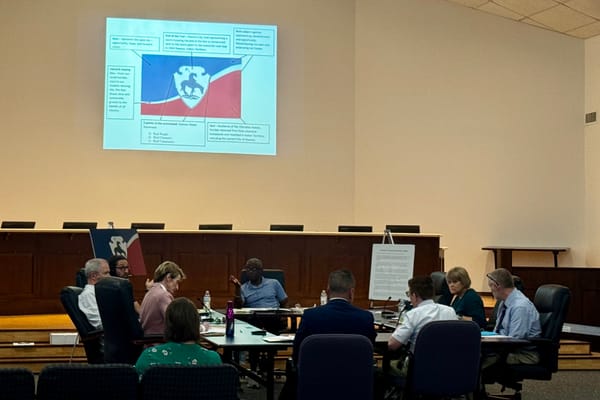
During a joint meeting of the Owasso City Council, Owasso Public Works Authority and the Owasso Public Golf Authority last week, City of Owasso Assistant City Manager JJ Dossett said “End of the Trail” has been the city’s seal since the 1970s.
The “End of the Trail” sculpture, created by James Earle Fraser in 1894, depicts a Plains Indian slumped over on his horse following forced removal from his ancestral homelands.
That symbol is at the center of the proposed flag’s design, which was inspired by a local youth and created in partnership with a local graphic designer.
Bible is a Greater Tulsa Area Indian Affairs Commission member and President of the Tulsa Indian Club.
He told Crosswinds News it has become increasingly important for him to speak his mind on Native issues.
“I've always been laid-back and let things go and things will take care of itself in its own due time,” Bible said. “And lately I've just started getting frustrated with the ways that are happening that I can't control. I know that. But I need to do my small part in my small community to try to make those changes.”
During Tuesday’s meeting, Bible spoke about growing up nearby, participating in local youth sports, and his connection to the community. He also addressed the meaning behind the “End of the Trail” symbol and how it is interpreted by some Native people.
“This is a Plains Indian. This is not a Southeastern Indian, where we came up through the Trail of Tears,” Bible said. “This is where, at the time, the push westward was meant to have us eradicated. This would be the end of the trail. This would be defeat. This would be the end. And it did not happen because we are still here.”
He also said he is proud of Owasso and other smaller towns that have grown.
“It's not personal, but I just felt that this is a symbol that does not show the spirit of Owasso,” Bible said.
Following the meeting, he told Crosswinds News that his feelings might not change anything, but he still wanted to bring them to light.
“It makes me feel better to speak about it and that I know I did my small part in it, whether it gets changed or not,” Bible said.
City councilors are expected to vote on the proposed flag design at an upcoming meeting, likely in April.