Tulsa’s Native community shapes plans for intertribal center

(TULSA, Okla.) Native American community members in Tulsa are another step closer to seeing an intertribal community center become a reality after years of conversations.
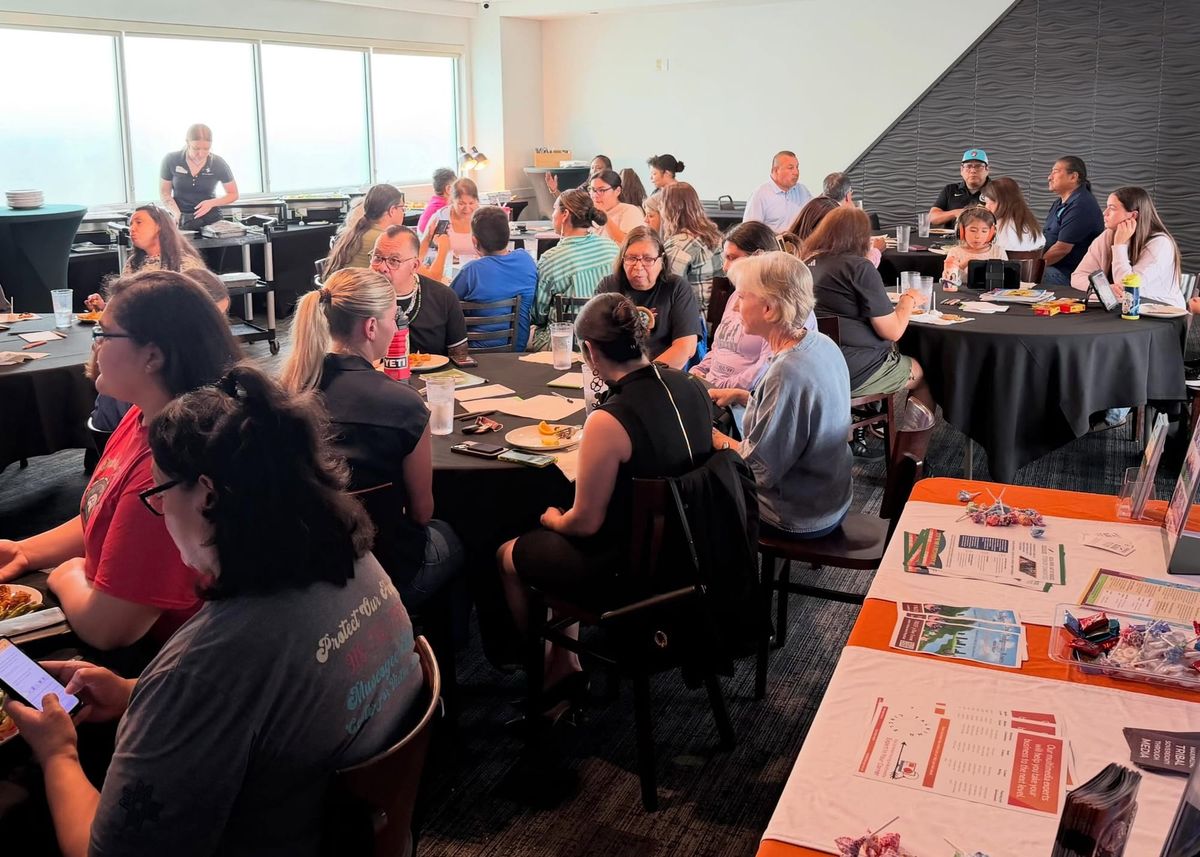
In late June, Crosswinds News, in partnership with representatives from the Tulsa Indian Club, the City of Tulsa Office of Tribal Policy and Partnerships and Indian Health Care Resource Center, held a community listening session to provide updates on where the effort stands while hearing directly from Native community members about what they want to see in a future community center.
Amanda Swope (Muscogee and Osage), director of Tribal Policy and Partnerships for the City of Tulsa, said the project has gained momentum in recent months as community leaders look at potential funding opportunities, available land and partnerships that could help move the effort forward.
"There are a number of different grant opportunities that have been brought to my attention that we can look at a number of different ways," said Swope. "Whether that is grants that tribes have access to that we can work with tribal nations in our area to acquire, whether it's ones that are for government specifically."
Swope said the City is also exploring whether land could potentially be donated for the project.
The location of a future community center remains one of the biggest questions. Tulsa sits within the boundaries of the Muscogee (Creek), Cherokee and Osage reservations, and community leaders acknowledged finding one location that satisfies everyone completely will be a challenge.
"It's just kind of looking at what's available, trying to get it into spaces where it seems relevant or at least centralized in some way," Swope said. "So yeah, if anybody has any opinions that they'd like to give to that, I'm all ears."
She also told attendees she believes the three tribal nations whose reservations overlap Tulsa would ultimately support the effort regardless of which reservation a community center is located on.
"I really don't get the sense that the fact that it is three different nations would prohibit them from contributing and investing and supporting this, even if it wasn't in their reservation," Swope said. "I think that they, as well as everybody else here, understands kind of the gravity of having a space like this."

Throughout the evening, panelists repeatedly emphasized that the project is intended to be community-led rather than driven by any one organization or tribe.
"This is not a one-organization-led effort," said David Bible (Muscogee and Hopi), president of the Tulsa Indian Club and co-owner of Southwest Trading Company. "This is for everybody."
Bible said that if an intertribal community center becomes a reality, the organization will eventually need a director with experience working with tribal communities or youth services. However, he said the community itself should determine the programming.
"The programming is going to be done by each and every one of you," Bible said. "What do you want to see? What do you want to have?"
Robert Anquoe (Kiowa), president of the Indian Health Care Resource Center Board of Trustees, described a vision for a center that would serve as a gathering place for Native families while offering cultural programming, educational opportunities, youth activities, community resources and space for ceremonies and community events.
"When someone passes away, sometimes we just need to have a space to bring in guests and families," said Anquoe. "Part of that process of mourning when one passes is during our ceremonies, we congregate as family members, as friends... And a lot of the facilities here in Tulsa don't allow that."
Community members also had an opportunity to share their ideas and concerns.
Attendee and Greater Tulsa Area Indian Affairs Commissioner Winnie Guess Perdue (Cherokee) cautioned against defining the center’s success by its size or influence, emphasizing that the community’s central goal is to have a place where Native people can simply gather and share life together.
“I was glad to listen and even more appreciative of the opportunity to now express my thoughts,” Perdue said.
“We simply want a place where we gather to enjoy and share in our life experience. May we commit ourselves to that goal.”
Another attendee encouraged organizers to consider a name that reflects the center’s intertribal mission and said it should be welcoming to Native people from federally recognized and non-federally recognized tribes alike.
Another emphasized the importance of preserving green space and mature trees as part of any future development.
"You want to have it to be accessible and level and all of that, but Oklahoma's hot, y'all," the attendee said. "One thing I miss about our homelands is the giant trees."
Swope and Anquoe agreed outdoor gathering space should remain part of the planning process while acknowledging the financial and logistical challenges of new development. The idea of a temporary space while a more permanent space is developed was also brought up.
"Development in land, it's an expensive process," Anquoe said. "It takes a lot of permitting, a lot of coordination. I think that initially, what we can do is we can plan this."
Bible told attendees organizers are working toward establishing a nonprofit organization to support development of the community center.
Swope said additional listening sessions and conversations with tribal leaders are expected as planning continues.
Crosswinds News will continue reporting on the effort to establish an intertribal community center. Become a free or paid member today and be the first to receive the latest updates.