Hundreds of artifacts to return to Mi'kmaq Nation, connecting the past to the present

(NOVA SCOTIA) The Mi’kmawey Dewbert Cultural Centre (MDCC) will open its doors in 2028. It’s a project that has been decades in the making with a goal of connecting past, present, and future generations.
Once opened, it will also include Mi’kmaq artifacts that are more than 100 years old that will come from the National Museum of the American Indian (NMAI) in Washington D.C.
The Mi'kmaq Nation includes 13 First Nations in Nova Scotia. Additional Mi'kmaq First Nations are located in New Brunswick, Newfoundland and Labrador, and Quebec. In the United States, the Aroostook Band of Micmacs is a federally recognized tribe in Maine.
“There’s a great interest to see a number of what we call ancestors returned back home,” said Tim Bernard, the Executive Director of the MDCC. “In today’s communities there’s a lot of direct connections, like family members who may have given up some of their belongings, may have made some of these belongings.”
Bernard says a woman who worked at the Robert S. Peabody Museum of Archaeology in Andover, Massachusetts, contacted cultural staff and others associated with the Mi’kmaq of Nova Scotia in 1997 about photos that were connected to their communities.
“She came with this box of amazing photographs of people in our community from 1929, 1930,” said Bernard. “We did an exhibit called “Let us Remember The Old Mi’kmaq” and a follow up to the exhibit, we created a catalog of the images and we published that in 2000.”
When the National Museum of the American Indian was moving collections from New York to Washington D.C., Bernard and other Mi'kmaq people noticed that there were artifacts in the collection that matched some of the photos from anthropologist Frederick Johnson that they had displayed in the exhibit.
Bernard and others developed relationships with staff at the Cultural Resources Center for the NMAI and the Smithsonian and began developing a plan to bring the Mi’kmaq collections connected to Nova Scotia back to Canada.
Part of that effort has included the Elders Advisory Council that has been part of the development process for the Mi’kmawey Debert Cultural Center.
“We are guided by an Elders Advisory Council and they want to make sure before we’re bringing any collections home that we can care for them,” said Bernard.
Caitlin Mahony, a Conservator for NMAI, has been working with the Mi’kmaq of Nova Scotia as they prepare to bring the collections home through the Shared Stewardship agreement they have with the MDCC.
Mahony said a Shared Stewardship agreement recognizes that there is a partnership between the National Museum of the American Indian and Mi’kmawey Debert Cultural Centre and that both institutions are responsible for ensuring the artifacts and collections are properly cared for.
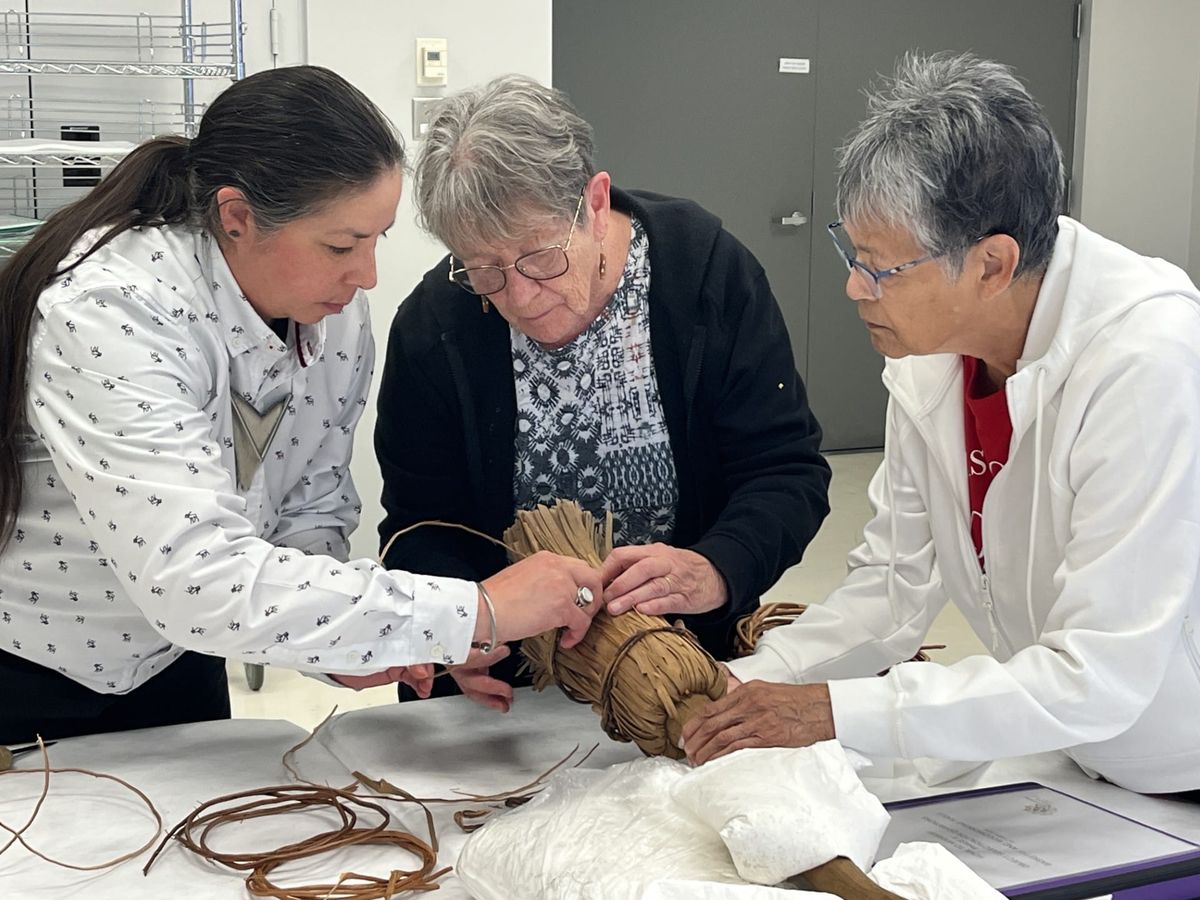
Staff from the MDCC spent nine months at the Cultural Resources Center at the NMAI, examining each collection item with Conservators and Smithsonian staff to determine how the items needed to be cared for in order to transport them safely.
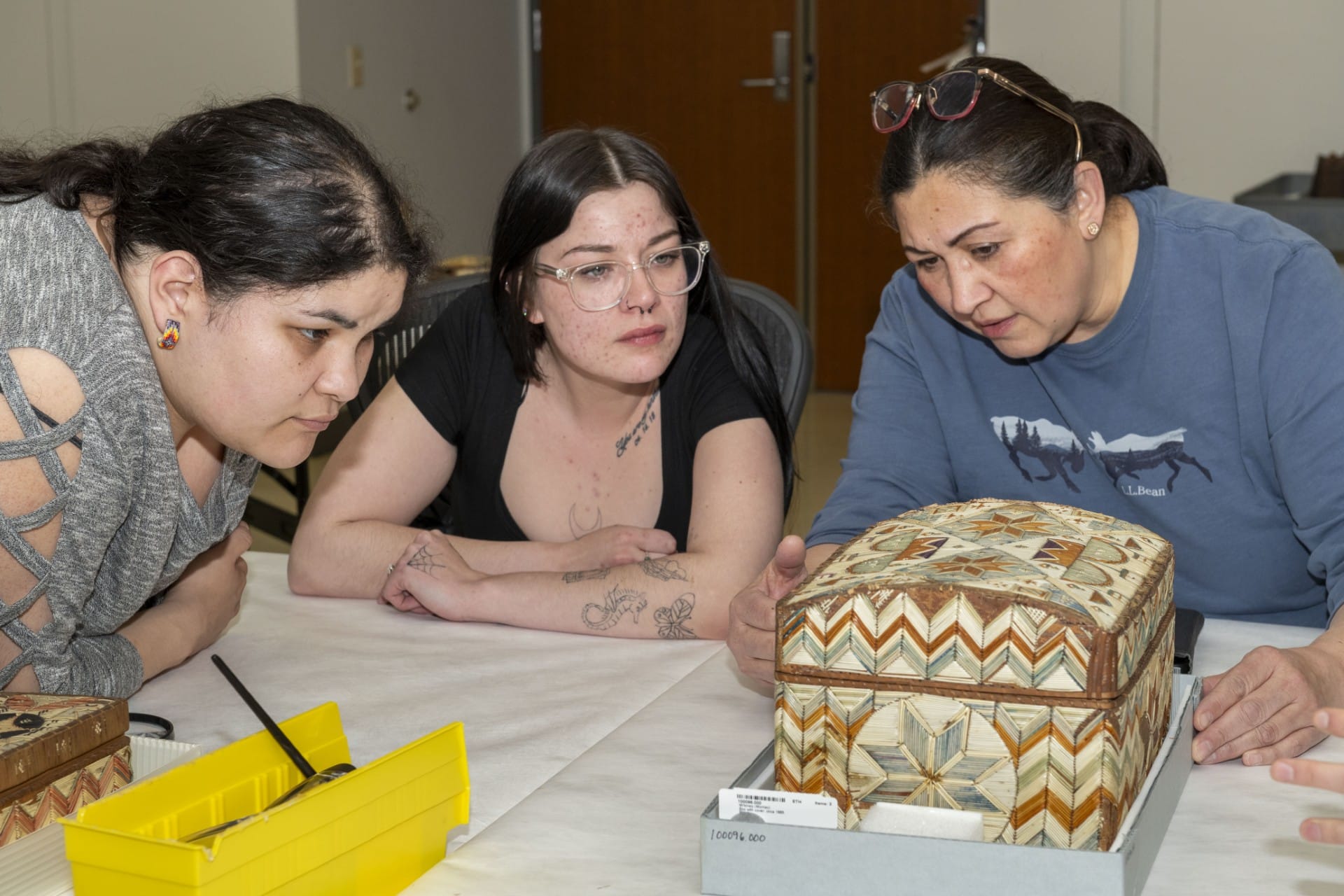
“That work informed the past several years where MDCC has created practitioner advisors, people that are masters of quillwork, beading, regalia, and basketry,” said Mahony.
The Practitioner Advisors spent time with the collections in 2024.
“The practitioners were doing the treatments that needed to happen for the items to be stable because they know the materials, they know the construction techniques and they are the right people to make those treatments,” said Mahony.
Mahony says it is exciting to be able to see these cultural belongings prepared to be displayed for Mi’kmaq communities.
“They’ve been visiting since the late 90’s, said Mahony. “So we’ve had a relationship with them that has evolved and is quite deep. It is great to work with partners where we have a relationship where we can work through these things together as we figure out what shared stewardship means.”
Transporting these artifacts to Nova Scotia also requires funding. Some of the funders for the project have included Scotia Bank, Alongside Hope (an arm of the Anglican Church), and Enbridge.
Enbridge donated $10,000 to help bring the collections back to Nova Scotia.
“We’re still tallying what it’s going to cost to return the collection,” said Bernard. “We’re a little over, probably $500,000 U.S. dollars to return them home.”
Bernard says private donations towards the MDCC or the efforts to bring the collections back are appreciated and important.
“It helps us leverage because a lot of the government funding, it’s not 100%,” said Bernard. “They would contribute 50, 75% and they need to see that there’s other donors out there.”
After the years-long effort for this project and the history of residential schools and assimilation, Debert says it’s important that the community will have the collections available for people to view without having to travel to Washington, D.C.
“Despite everything that's happened, we continue to thrive and live, and, you know, we just want people to understand where we're coming from, our story,” said Bernard.
More information about the MDCC project and a donation page can be found on the organization’s website.
Enbridge is a Winds of Change Executive Benefactor of Crosswinds News. Through this benefactor program, Enbridge provides financial support to help sustain Indigenous-led journalism and storytelling. However, Crosswinds News maintains full editorial independence, and this article was produced in alignment with our commitment to fair, accurate, and culturally responsible reporting. For more information about the Winds of Change Benefactor Program, click here.