IHCRC Native Youth Drum Group Helps Prepare the Next Generation of Drum Keepers
(TVLSE, Okla.) The drum is the heartbeat of Native ceremonies, celebrations, gatherings and community.
For centuries, the sound of the drum has brought people together, guiding songs, prayers and stories. While every tribe has unique teachings around the drum and its creation, it is one of the most respected and important instruments across tribes. The drum is far more than something that just makes music. It represents responsibility and the continuation of Native cultural teachings for generations to come.
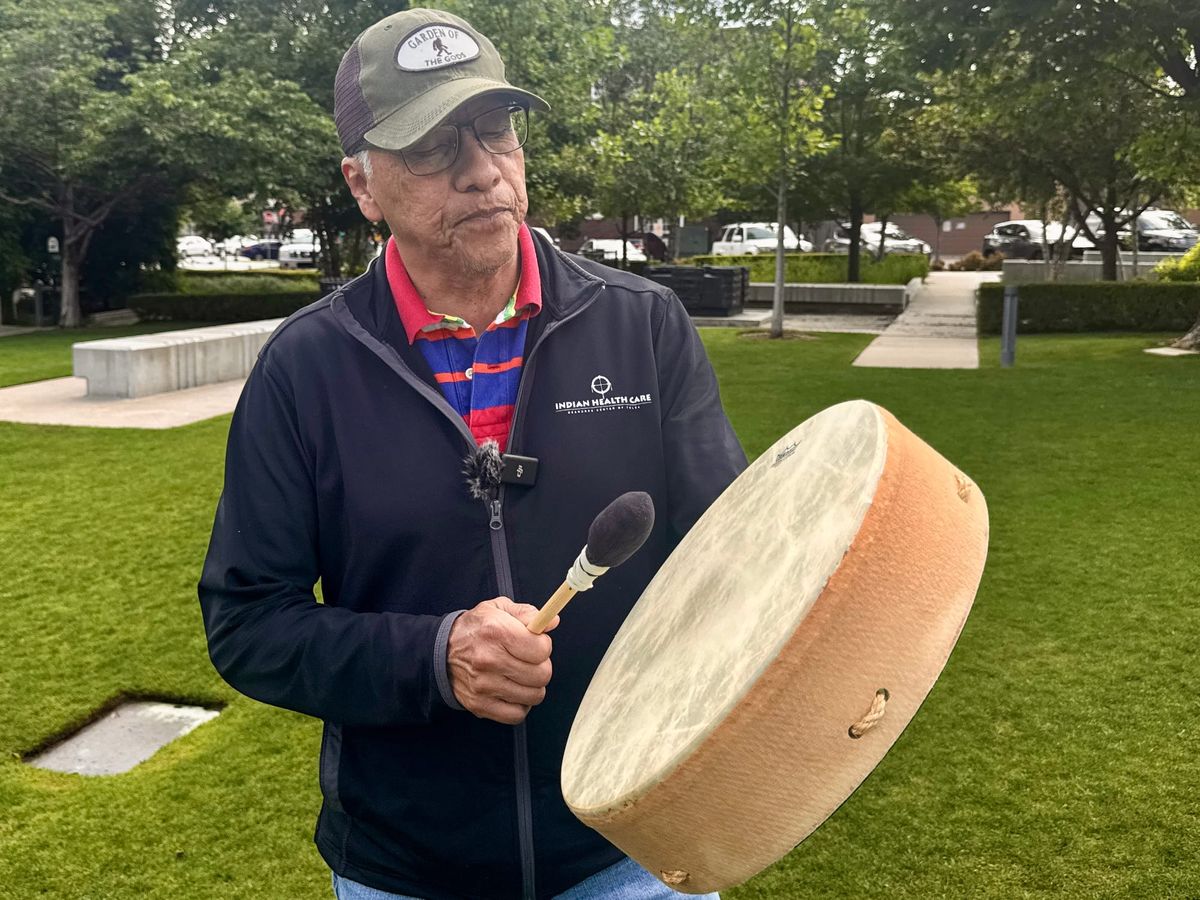
Those teachings continue inside the Indian Health Care Resource Center in Tulsa, where Native boys ages 12 to 18 gather on the last Thursday of each month to learn songs, cultural teachings and the responsibilities that come with sitting at the drum.
The role of the drum in Native culture
“It’s the heartbeat of the people,” said IHCRC’s Chief Executive Officer Carmelita Skeeter. “Any Indian celebration is brought together around the drum.”
For Skeeter, helping young people understand the drum is about more than teaching them how to sing.
”It’s very important that children learn to use the drum, play the drum, respect the drum and its participation in powwows and other community gatherings,” Skeeter said.
Many Native teachings describe the drum as a living presence. Traditionally made from wood and animal hide, often buffalo or deer, the drum carries prayers and songs toward heaven with a sound that some compare to thunder. To this day, many Native communities revere their drum keepers, who are entrusted with the responsibility of protecting and caring for the instrument.
Not all drums serve the same purpose. Some are played at public gatherings such as powwows, social dances and community celebrations. Events like the Tulsa Powwow bring singers, dancers, families and communities around the drum in a shared social experience.
Other songs and drums are reserved for private ceremonies and are not intended for public audiences. Teachings around sacred songs are held within tribal communities and ceremonial settings according to the tribe's customs.
The history of IHCRC’s youth drum program
The IHCRC Youth Drum Group, which focuses on social drumming and singing, was formed 18 years ago when Native community members recognized a need for a community space to convey cultural practices to the next generation..
In 2008, singer Joe Don Waters approached IHCRC’s program director Tim Shadlow with an idea. Waters believed Native youth in Tulsa needed a place where they could learn songs, spend time with mentors and learn about their culture.
“He felt that it was important to maintain that culture and tradition of singers,” said Robert Anquoe, who currently leads the program. “We don't have a lot of youth singers,” he explained, referring to Tulsa’s Native communities. “So we need to create spaces like these for them.”
With support from IHCRC, the youth drum group was established. Community singers brought songs from different tribal nations, including Kiowa, Ponca, Pawnee and Otoe-Missouria. From the beginning, the goal of the drum group was to create a welcoming environment where Native youth from different tribal backgrounds could gather around the drum and learn together.
Waters served as the group's head mentor until his death in 2014. Tim Shadlow stepped into his role to continue the work.
Another Native leader, Craig Satepauhoodle, partnered with Shadlow. Satepauhoodle was more than just a fellow singer.
“He was my cousin and an excellent mentor,” Anquoe said.
Satepauhoodle, whose father Evans Ray was a longtime advocate for Native people and a well-known Kiowa singer, brought strong leadership for the program. When Satepauhoodles passed in 2021 and Shadlow moved to other ventures, the drum group was temporarily put on hold.
In 2023, Robert Anquoe took the leadership role and helped restart the program, continuing the work that Waters, Satepauhoodle, and Shadlow had spent years building from the ground up.
Taking on this lead mentor role felt like a continuation of his own upbringing. Anquoe's grandfather, James Ace A Ongo, was a respected Kiowa composer whose songs are still sung today. Powwows, ceremonies and traditional songs were a regular part of Anqueo's life.
“That was my upbringing,” Anquoe said. “I was around singers all my life.”
Before becoming a mentor, Anquoe traveled throughout Oklahoma, across the United States, and into Canada as a fancy dancer. Along the way, he listened to songs from many tribes and communities. As he traveled, his appreciation for these songs and the diverse cultures they represented grew.
Anquoe sees the same appreciation beginning to grow among the boys who attend the monthly drum sessions.
IHCRC provides cultural space for Native boys
“It gives them a safe space,” Anquoe said. “It keeps them off the street and gives them an alternative in the Tulsa area.”
That safe space is important here in Tulsa, home to Native citizens from more than 60 tribes. Many Native families live away from their tribal communities and are not always able to return home for ceremonies, dances or cultural events.
”There’s always interest from our patients for anything culturally related that we can offer,” Skeeter said. “A lot of them are not able to get back to their tribes and participate in those events.”
IHCRC offers a variety of cultural activities, including classes in beadwork, painting, dancing and powwow etiquette. These programs are designed to provide safe, positive activities for Native youth while also promoting cultural engagement.
“If you don't participate in your culture, then you’re missing one aspect of your health,” Skeeter explained. “Culture is an overall guide to wellness.”
Anquoe sees the drum circle as a great example of this type of enrichment. The drum is sometimes referred to as “Grandpa,” reflecting the respect it receives and its role in conveying cultural knowledge.
“Our ancestors sang and danced,” Anquoe said. “That was part of their lifestyle, and they told stories through songs.”
Those stories and songs still carry meaning today. In fact, many Native people see traditional songs and drumming as a form of medicine.
“It helps us heal and be connected to who we are and be proud of who we are,” Anquoe said.
The lessons learned around the drum are not meant to be kept to oneself. Anquoe hopes the youth attending these sessions will take what they learn back home and share it with their families, eventually passing it on to their communities.
These lessons resonate with Kiowa drum circle veteran Rusty Cozad, who told the National Cowboy & Western Heritage Museum that he was taught to take care of the drum and it will take care of you. Cozad described the drum’s circular shape as a reflection of life itself.
“The circle of the drum is never-ending,” he said. “It's like life: It’s never-ending.”
That lesson is at the heart of the IHCRC Native Youth Drum Group. The program is not about teaching specific songs so much as teaching responsibility. It is about creating a place where boys can learn from those who came before them and prepare them to someday become the singers, mentors and leaders who will teach the next generation these lessons.
For Anquoe, the group’s success is measured by how many participants return, find pride in who they are, and choose one day to sit at a drum and pass on the lessons their elders taught them.
“Last year we had five young men, and they came back this year,” Anquoe said. “It’s important to them to carry on this practice.”
Visit IHCRC’s website for drum group meeting information and participation details.