Native Artists Encouraged to Help Shape Route 66 Centennial Art Project

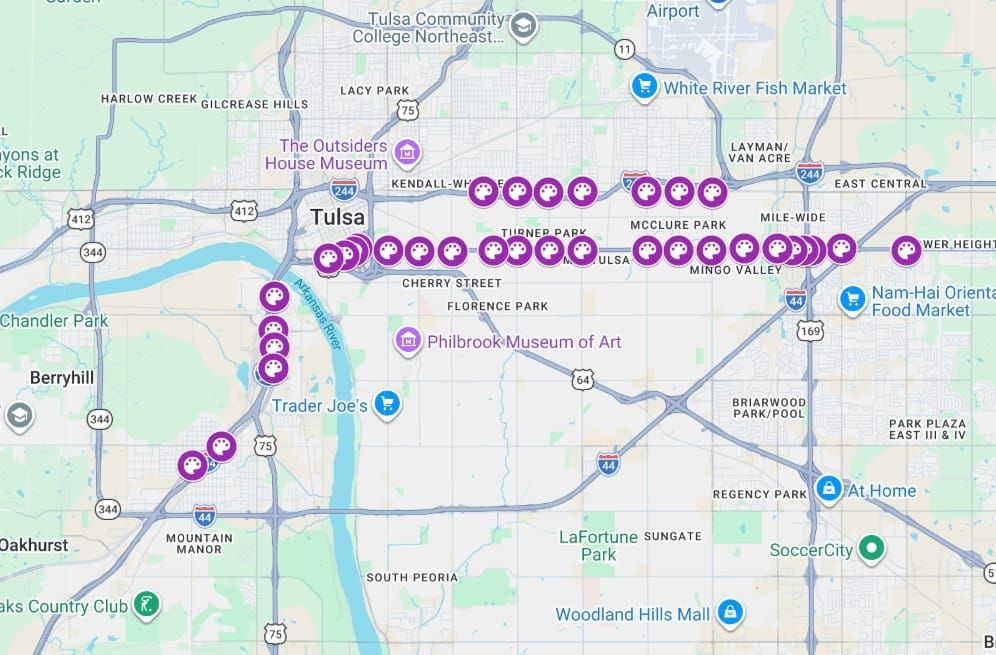
(TULSA, Okla.) Tulsa is celebrating the 100th year of Route 66 and city leaders want local artists to be part of the celebration.
The Route 66 corridor runs through 28 miles of Tulsa. Now through July 1, the city is inviting local artists to submit up to four original designs that will be installed in traffic control boxes along the highway.
Carly Treece, a Muscogee citizen with Cherokee ancestry, is an artist and art curator. She said she hopes that this project will be an avenue to showcase Native American artwork.
“I think it’s important to uplift our Native artists,” said Treece. “I think that we have often been left out of the conversation and Tulsa art scene. I feel like this would bring us into the mainstream arts culture in Tulsa.”
Tulsa sits on the Muscogee (Creek), Cherokee, and Osage Reservations. Treece says the experiences Native Americans have endured in the city and Oklahoma also need to be remembered.
“The history of Route 66 is that a lot of Black and brown people were barred from having businesses whenever it first started,” said Treece. “I think it's important to talk about that history. I think it's important to know that in Tulsa, Route 66 runs through original Muscogee allotment lands.”
Treece tells us she has worked with the city before and some of her work adorns trash receptacles throughout Tulsa.
She has also reached out to other Native artists to encourage them to apply to have their work showcased on the traffic boxes.
“Route 66, there is some cultural appropriation throughout the road,” said Treece. “I think that’s a part of that route's history as well. I think the right thing to do is have actual Native artists with Native art and bring attention to that.”
Treece says she thinks Native representation is also key in having more Native art included in city projects, such as Yatika Starr Fields, a Cherokee, Muscogee and Osage artist who is also a Tulsa Arts Commissioner.
“I do think it’s important that Yatika is on the city arts council,” Treece said. “I feel like his voice is an important voice that has never been present in the Tulsa Arts Council, that we now have that voice there for us.”
Artists whose designs are chosen to adorn the traffic boxes will receive $500 for each design. The traffic control boxes wrapped in the artwork will also have a QR code that will contain more information about the artist who designed it.
Artists can learn more and submit applications online here.