Native youth face high homelessness rates, gap in Tulsa shelter options

(TULSA, Okla.) Native youth in Tulsa are more than four times as likely to experience homelessness as white youth, according to the 2025 Tulsa Equality Indicators.
The indicator includes young people ages 13 to 24. But for those experiencing homelessness, the services available can change significantly once they turn 18.
Youth Services Tulsa (YST) offers temporary housing solutions for teenagers and young adults experiencing homelessness, but the type of housing services available depends on whether the person is considered a minor or a legal adult.
“For those youth under the age of 18, we have an adolescent emergency shelter, with capacity for 20 young people at any given time,” YST Executive Director David Grewe said. “Those young people come in generally in times of crisis, sometimes they're in some type of transition within the foster care or juvenile justice system.”
For people between 18 and 25, YST offers dorm-style housing. The organization owns five apartment buildings, half of which are available for rent at market rate. The other half are reserved for young people in need of stable housing.
“Last year, I think we housed about 105 young people transitioning into independence,” Grewe said. “That's typical of any given year. It doesn't quite meet the need of what the community needs, but it's what we have the capacity to do at this point.”
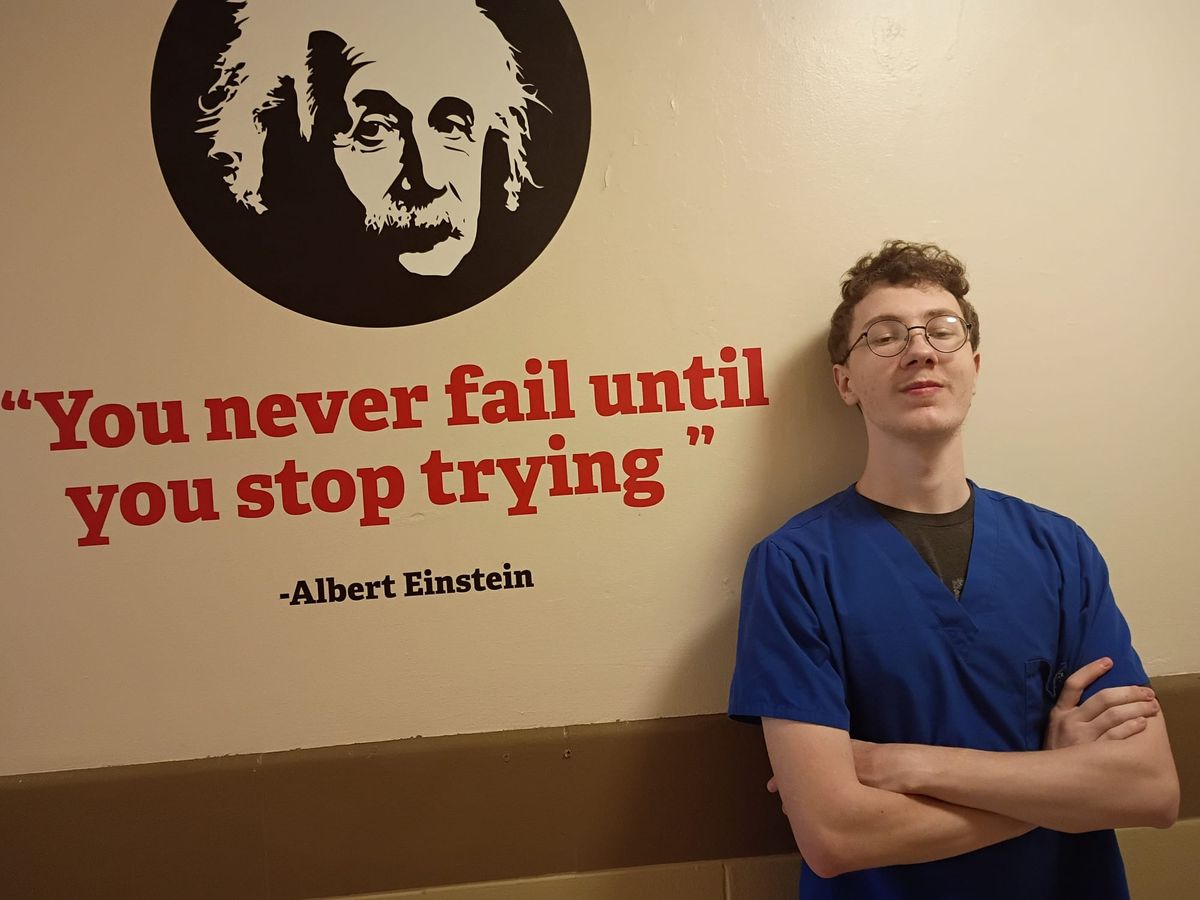
Evan Rogers (Cherokee) is 20 years old and became unhoused when he was 18.
“I walked about 30 miles by myself in the middle of the night, cold, rain,” Rogers said. “And I just came to Tulsa, Oklahoma. No sleep. And then I tried to look for a place to stay. That's when I found the Day Center.”
Rogers also slept outside in trees, in a shed behind a gas station and at shelters when he could get a bed. He said the experience of being unhoused was scary at times.
“When I was homeless, I was surrounded by people who were addicted to drugs, people who would constantly steal from others, people who would threaten lives,” Rogers said. “I almost got molested once. And it was extraordinarily scary.”
One of the things Rogers said would have helped was a shelter specifically for young people between 18 and 25. Even though Rogers was 18 when he became unhoused, he said he did not feel ready to be around so many adults who were much older than him.
“Youth should most definitely have their own homeless shelters, yet they do not,” Rogers said. “Kids should not have to be around alcoholic and drug-using adults that will threaten their lives and try to molest them.”
Grewe said the emergency shelter operated by YST only serves people under 18 because, after that age, they are considered adults and cannot be housed with people under 18.
Grewe also said he has heard sentiments similar to what Rogers expressed about the need for a shelter for young people over 18, but funding remains a challenge.
“I think that’s a common thing we hear from young people as well,” Grewe said. “We have talked about that as an organization and there is no stable funding source to build a shelter for that 18 to 25 year old age group, no consistent government funding at this time that we've been able to identify, or the resources to do that.”
Grewe also provided statistics on the Native youth and young adults YST has served. Preliminary numbers for fiscal year 2026 show that 12.5% of youth housed by YST in apartments identified as American Indian or Alaska Native. Another 16% of youth who used the adolescent emergency shelter and 12% of those who utilized street outreach services or the drop-in center identified as Native.
As for Rogers, while he has a bed to sleep in now, he said he still faces challenges related to being unhoused, including the need for a working phone. He uses it to apply for jobs, arrange rides to appointments and communicate with people and agencies assisting him.
“I need a new phone because my phone is starting to die, but I can’t get that if I don’t have the money for it and I really need it,” Rogers said. “You need a phone for everything.”
He set up a GoFundMe to help him purchase a new phone.
As he works through those challenges, Rogers said he keeps his dreams at the front of his mind, including someday living abroad in places like China or Europe.