Trapped by Wealth: The Abuse and Trafficking of Katie Fixico


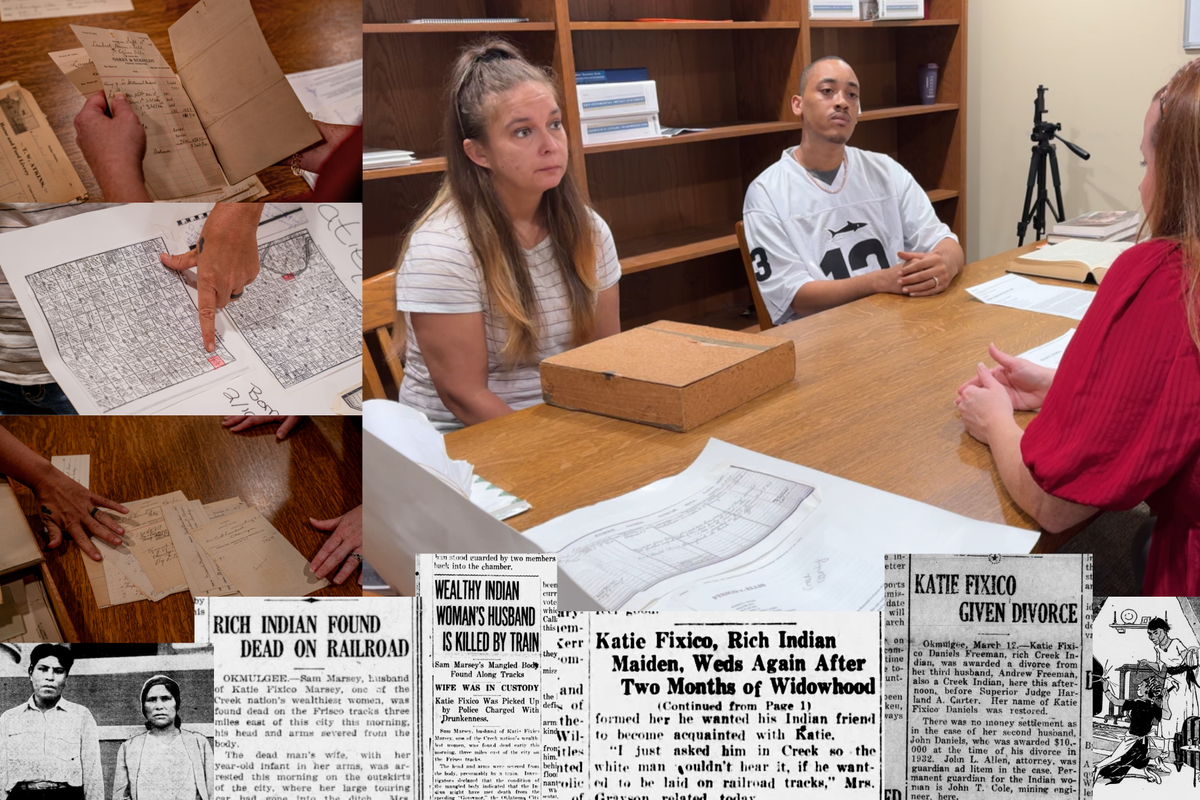
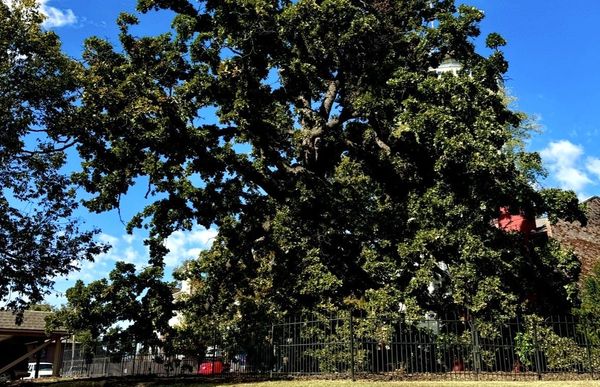
(OKMULGEE, Okla.) Back in the 1930s, Oklahoma socialite Katie Fixico had a reputation for exuberant living and entertaining at her three-story, Southern-style mansion south of Okmulgee.
“She had crazy parties at her house,” her great-great-granddaughter, Crystal Fixico told Crosswinds News. “She would have lots of people over, and the mansion would be full. But she wouldn't let people leave.”
So much so that Katie Fixico had a crude but very effective trick for keeping people there after a long night of drinking and debauchery: shooting out their car tires. The next day, she’d buy brand new tires for all of her guests.
New tires were nothing to Katie, who was also known to buy a new car if she ran out of gas.
This reporting was supported by the International Women’s Media Foundation’s Fund for Indigenous Journalists: Reporting on Missing and Murdered Indigenous Women, Girls, Two-Spirit and Transgender People (MMIWG2T).
These are just a few of the stories Crystal Fixico grew up hearing about the lively and unusual times at her great-great-grandmother’s estate nearly a century ago. The elder Fixico exuded the wealth that came with oil being discovered on her Oklahoma property, which included a large swimming pool Crystal would enjoy splashing around in decades later as a child.
Now 40 years old, Crystal Fixico said early on, she didn’t understand the significance of her relative owning a mansion as a full-blooded Muscogee Creek woman. Vast riches were hard to come by for most Americans in Depression-era America, especially those living on Indian reservations.
The birth of a millionaire
Katie Fixico is believed to have been born in 1893, and died at just 46 years old. While her short life was packed with indulgences and off-the-rails adventures, there were also dark periods of loss and exploitation.
When she was only three, Katie lost both of her parents and her only brother to smallpox. The disease was spreading at an explosive rate, killing many in the Muscogee Nation.
After losing her immediate family, Katie Fixico bounced from relative to relative, with little opportunity to better her life.
But her family’s deaths also left her in possession of 160 acres of land near Cushing, Oklahoma. During the prospecting era that would eventually make Oklahoma the state synonymous with the oil boom, a gusher was found on her property in 1912. At the tender age of 15, Katie Fixico caught many people’s attention because she was a “full-blood Creek” who had become a millionaire overnight.
This was just the start of the chaos of wealth for Katie Fixico.
A futile tug-of-war over assets
In 1915, Creek tribal attorney R C Allen filed a lawsuit uncovering a plan by white businessmen to take Katie Fixico’s $1 million estate in Muskogee, Okmulgee, and Tulsa.
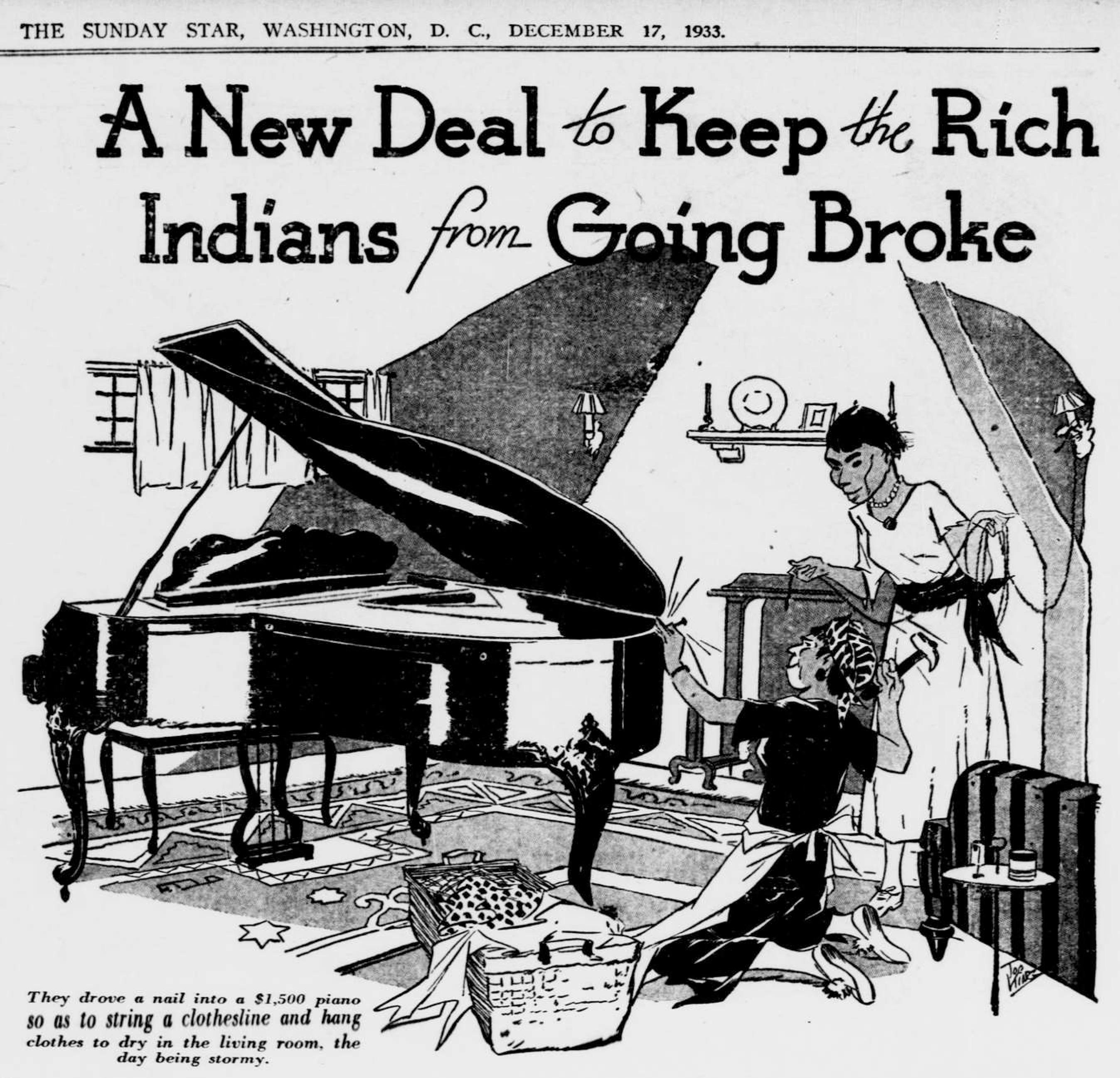
Allen was quoted in the Guthrie Daily Leader as saying Katie was “an ordinary Indian maid and entirely ignorant of money values.” It was a recurring theme for many overnight millionaires in Oklahoma’s Indian Country, where courts overwhelmingly determined that non-Native businessmen needed to control their assets.
It typically did not end well for the Natives who, like Katie, often did not speak English.
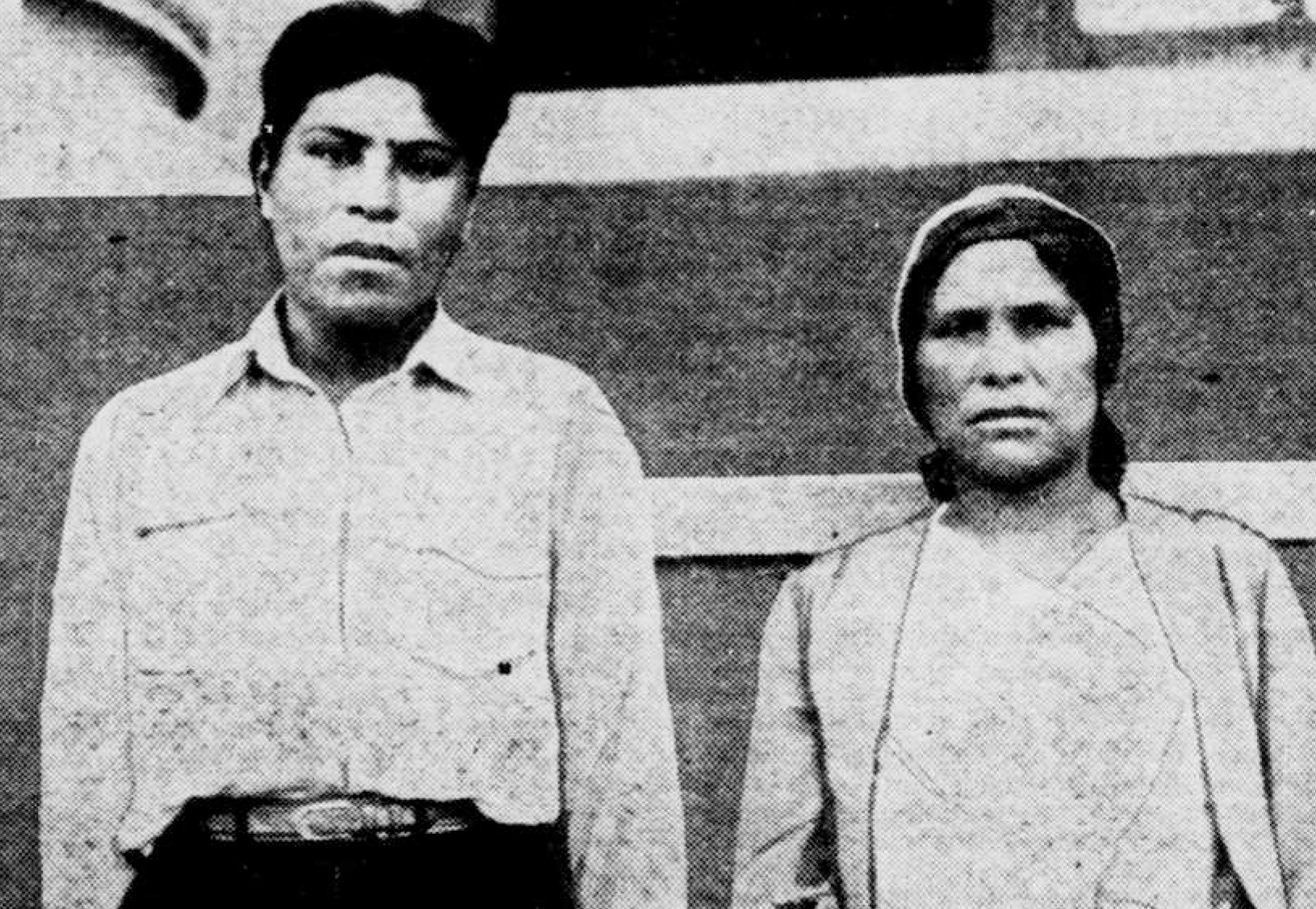
In Katie’s case, William P. Morton was her guardian until she turned 18, controlling her allotment and the 8,000 barrels of oil it produced a day.
On her 18th birthday, Allen alleged, Morton took Katie to Okmulgee where she signed over the land, oil rights, and future oil money to Morton’s brother at his instruction, trusting him and believing she was doing what was right, not truly understanding what she was doing, or even realizing it was her birthday.
Katie was promised $22,500 but was only given $4,000 to be accessed at Morton’s approval. 60 percent of Katie’s future oil money would go to Morton to pay off the deal.
The Oklahoma Supreme Court threw out the 1915 deals years later due to lack of court approval.
In 1915, the Okmulgee County Court declared Katie Fixico incompetent and therefore unable to care for her newfound wealth. E.W. Kimbley was appointed as her new guardian.
But the financial injustice didn’t stop there.
Okmulgee historian Wayman Lewis launched the Okmulgee Hall of Fame four years ago, which he is now director of.
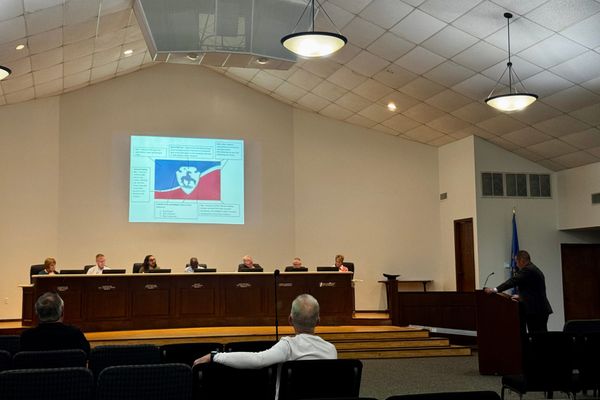
He told Crosswinds he was reading through a book about local history at the Okmulgee Public Library when he came across an article talking about the Okmulgee County Courthouse being built with Katie’s money in 1916 after taxpayers refused to support it.
“It was a very, very large amount of money,” said Lewis. “That’s what got me invested in Katie Fixico’s story.”
In a 1923 memorandum obtained by the Indian Rights Association, Sapulpa attorney L. O. Lytle wrote, “If the machinery of the Government had entered into a conspiracy to cheat, rob, and defraud the Indians in Oklahoma, it could not have done it in a better way than by the laws it passed.”
Lytle referenced laws such as the Act of May 27, 1908, also known as “The Crime of 1908” which transferred all probate jurisdiction from the federal government to Oklahoma’s county courts. The move effectively declared open season on Native allotments in the state.
Regarding Katie’s estate, Lytle said $150,000 of her money went into the courthouse bonds of Okmulgee County.
“The guardian took and deposited all of those bonds in an Okmulgee bank, and checked on that account personally,” Lytle wrote. “The bank took $25,000 worth of the bonds and put them into the county treasurer's hands to be able to get State funds into the bank. We started in to get that guardian removed and they disqualified the county judge, and elected a special judge. They never let us get to the court.”
Lewis said building the courthouse with Katie’s money added insult to injury, especially considering how often she would be dragged into it throughout the rest of her lifetime.
“They go and use someone that they're exploiting to build that courthouse,” Lewis said. “That was a slap in the face. No name there today.”
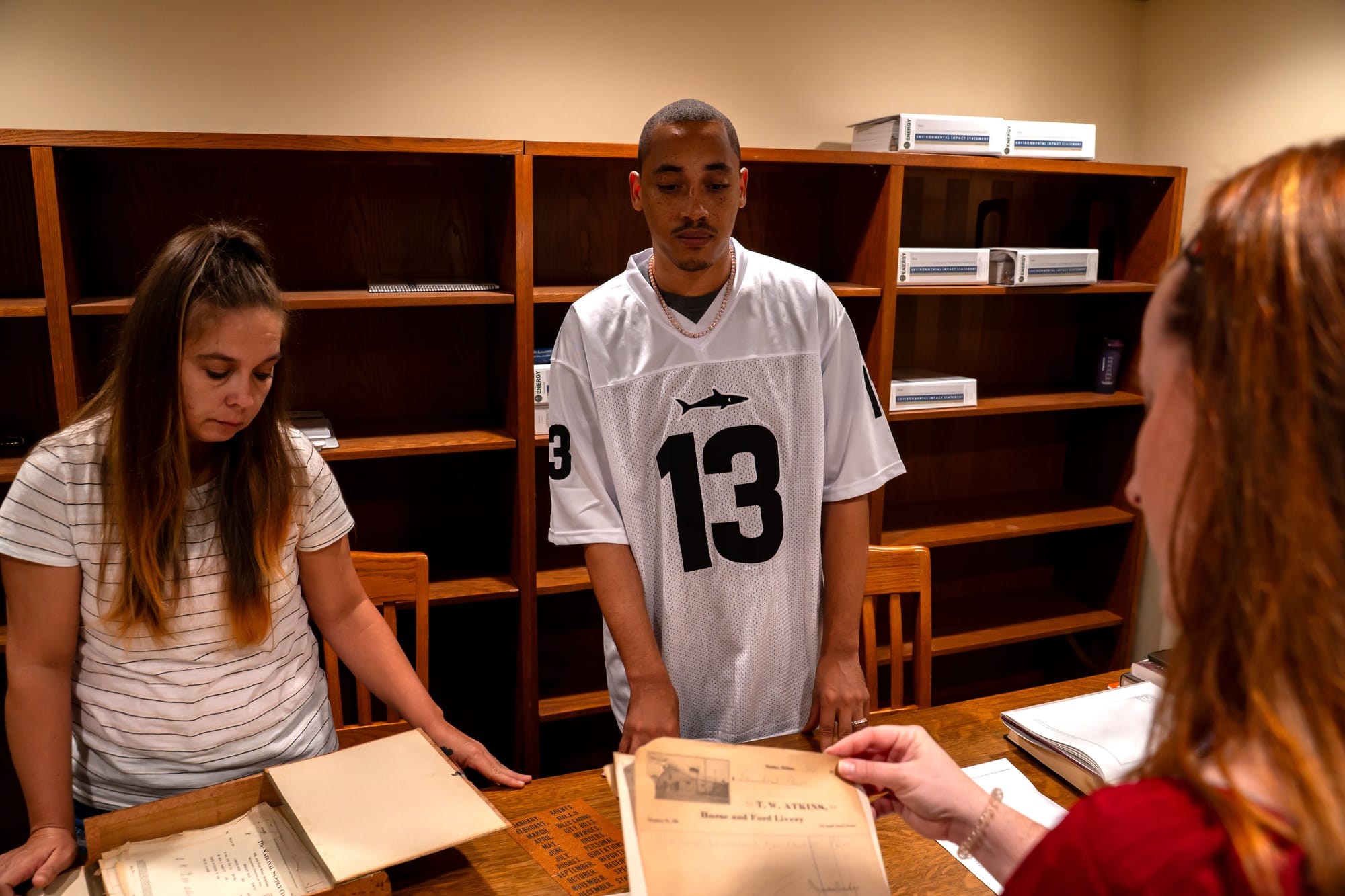
Lewis is both Muscogee and Black and said spotlighting Native history like Katie’s is easier due to the paper trails. But he said it’s also purposely being erased and kept hidden.
“With Ms. Fixico, she wasn't the only one that that happened to, the first or the last,” Lewis said. “But because it happened and we don't talk about it enough, our families are still facing these issues today.”
A trail of abusive men - and one troubled “true love”
Katie was married three times, but Crystal believes she loved only one of her husbands.
“Sam Marsey, of course, is the one that did the most right by Katie,” Crystal said.
Katie and Marsey, a full-blood Muscogee and World War Veteran, were married in 1918. According to an article in The Morris News, the wedding was the “culmination of a childhood romance” after the pair met at an Indian boarding school west of Okmulgee. Katie would have been about 25 years old at their wedding.
They were married 5 years before Sam was tragically and mysteriously killed by a train.
In October 1923, multiple newspapers reported Sam was found on train tracks with both his head and arms severed from his body. Katie was found three miles away with her infant daughter in her arms, having driven her car into a ditch.
As to how Sam met his end, there were conflicting reports. Katie reportedly told police that she stayed in the car after crashing into the ditch, while her husband continued home on foot. Reports also state that Katie and Sam got into an argument, leading her to attempt to drive home and him to walk.
Officers said both Katie and Sam had been drinking that night, and that Sam might have caught another ride before he was hit by the train. While foul play was investigated, the only conclusion ever reported was that the train had killed him.
Katie was arrested by police for drunkenness and released after her guardians bailed her out of jail. She was informed of her husband’s death after she sobered up.
Alcohol plagued Katie much of her adult life, encouraged and obtained by those seeking to swindle her, and extending into the courses of her next two marriages.
"My judgment is that the liquor question has played a most important part in the domestic difficulties of Katie and John probably,” a field agent assigned to her case reported years later. “Or considering the array of lawyers I necessarily feel that some unscrupulous white people are using the liquor route as a means of again plundering Katie's estate."
After Marsey’s death, Crystal said, she believes she was pressured to remarry. And there was no shortage of suitors for the wealthy Native millionaire.
According to the Okmulgee Daily Democrat, while Sam’s body was being “patched up” at the undertaker’s establishment, a businessman and a young Muscogee man appeared at the home of a well-known Muscogee interpreter named Mrs. Grayson, asking for an introduction to Katie.
“I just asked him in Creek so the white man couldn’t hear it, if he wanted to be laid on railroad tracks,” Mrs. Grayson reportedly said. She never saw the Muscogee man again.
“There were a few that were abusive and didn't treat her very well,” Crystal said. “And Katie was strong though. Katie fought back a lot. And she did endure a lot, though, throughout her marriages and her life and the people she thought were friends.”
Katie married her second husband John Daniels, a Muscogee man charged with killing another man with a stick of stove wood, just two months after Sam’s death. The charge was later dismissed.
The pair remained married until 1932, though another Muscogee man named Andrew Freeman had already worked his way into the mix.
"If Katie Fixico is still using intoxicating liquors, I must assume that Andrew Freeman would be the one that would make the contact to procure the same for her," a field clerk reported in May of that year.
The field clerk's report, obtained from Katie Fixico’s probate case file at the National Archives in Fort Worth, disclosed plans to separate Andrew from Katie, as he was believed to have taken her out of state, away from her husband.
"The plan I have in mind involves the question of white slavery,” the field clerk wrote. “When Andrew is confronted with that proposition, then in all probability, he would be glad to keep away from Katie."
The field clerk's reference to "white slavery" likely related to the White Slave Traffic Act, also known as the Mann Act of 1910, the first federal act to criminalize human trafficking "any woman or girl for the purpose of prostitution or debauchery, or for any other immoral purpose".
Though Katie repeatedly went missing, often out of state, there was no concept of the Missing and Murdered Indigenous Women issue in Fixico's time, and neither the courts nor her guardians rushed to find her.
Whether the field clerk ever had the chance to threaten Andrew with the white slavery charge, the effort ultimately failed.
Katie married Andrew Freeman in Hot Springs, Arkansas, in September 1932, three months after her divorce from John Daniels. According to reports, Andrew was 22 years old at the time.
Katie divorced Andrew in 1936. She passed away four years later.
A legacy shaped by harm and heart
Dead at just 46 years old, alcoholism was not listed as the cause of Katie’s death. Her official cause of death was reported as an acute kidney ailment. But, given her history with alcohol, alcoholism likely contributed to it. Researchers have found that heavy alcohol consumption can injure the kidneys and contribute to kidney disease or failure.
The weaponization of alcohol against Native Americans extended far beyond the Muscogee Reservation, of course. And it’s an issue many tribes like Muscogee Nation still grapple with to this day.
The Substance Abuse and Mental Health Services Administration’s (SAMHSA) 2023 National Survey on Drug Use and Health (NSDUH) reported the percentage of people aged 12 or older in 2023 with a past year substance use disorder was higher among American Indian or Alaska Native (25.3%), Multiracial (24.3%), or White people (17.8%) compared with Hispanic (15.7%) or Asian people (9.2%).
A 2024 report by Trust for America’s Health (TFAH) found alcohol-induced death rates were highest among American Indian and Alaska Native people.
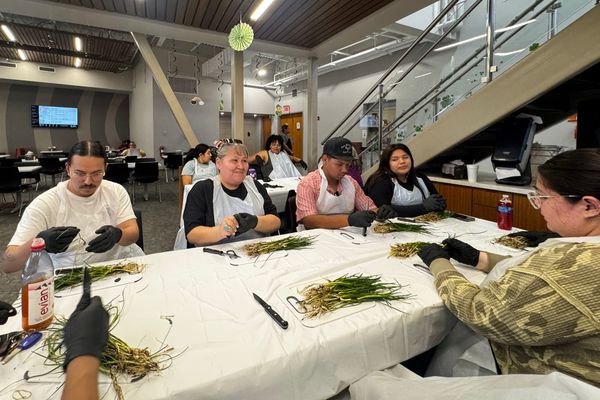
From the College of the Muscogee Nation organizing stomp dance can-making workshops to Mvskoke rapper Sten Joddi promoting Mvskoke culture at a block party, tribal leaders and influencers are taking multiple approaches to combat substance use disorder like alcoholism within the Nation.
Meanwhile, the Nation has been busy expanding services across the reservation, with six locations to address behavioral health and substance use, and more development announced just last month.
While records may paint a picture of Katie Fixico as a hard-partying socialite of great wealth, she was much more than that.
Numerous accounts show her donating money to churches, schools, and neighbors throughout Okmulgee. Behind the public facade was a Muscogee Creek woman wrestling for control of her assets but being exhausted and outnumbered by abusive men who tapped into her fortune for their own benefit.
“All of this makes me upset; a lot of this should not have happened,” Crystal said, reflecting on her great-great-grandma’s life. “And I don't understand how any court, when they're supposed to be there for the people, would allow a lot of things that happened to Katie to happen.”
She said it’s important for people to know their family history, so they can know what not to repeat as well as how to surround themselves with people who will help them succeed.
As her grandparents, father and uncle have all passed away, Crystal is now left as the family’s remaining story keeper.
“I'm the only one that has them now,” Crystal said.
This reporting was supported by the International Women’s Media Foundation’s Fund for Indigenous Journalists: Reporting on Missing and Murdered Indigenous Women, Girls, Two-Spirit and Transgender People (MMIWG2T).