The Wait for Justice: A Muscogee Life Stolen by Fentanyl

By Whitney A. Pingleton
(CATOOSA, Okla.) Fentanyl overdoses remain one of the leading causes of preventable death in the United States. According to the Centers for Disease Control and Prevention, synthetic opioids other than methadone (primarily fentanyl) were involved in 72,776 overdose deaths nationwide in 2023. The CDC also reported that American Indian and Alaska Native people experienced the highest age-adjusted drug overdose death rate of any racial or ethnic group in 2023, at 65.0 deaths per 100,000 population.
Behind these statistics are families seeking answers and accountability.
For the family of Stephanie Pingleton, a Muscogee citizen and Catoosa resident, the fentanyl crisis is not simply a public health issue. It is a justice issue.
Pingleton died in May 2025 after going into cardiac arrest while visiting a neighbor and remaining unresponsive for several hours before emergency medical care was sought. Toxicology results later confirmed a lethal level of fentanyl in her system, with no other substances detected. More than a year later, despite an ongoing investigation involving local law enforcement, tribal police and the Bureau of Indian Affairs, no arrests have been made, leaving her family still seeking answers surrounding her suspicious death.
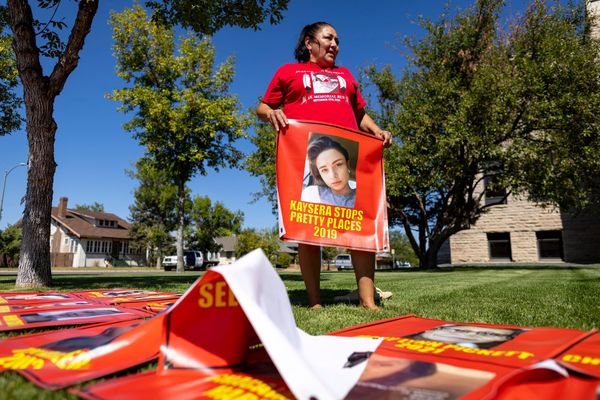
Although fentanyl deaths are typically classified as accidental overdoses rather than Missing and Murdered Indigenous People (MMIP) cases, families often face similar circumstances and challenges in accessing information, navigating law enforcement agencies and pursuing accountability. Because these cases are handled through separate systems, their shared barriers to justice are often overlooked.
Karen Dodge-Kelso, project manager for the Muscogee Nation Office of the Secretary of the Nation and a specialist in Indigenous Peoples Law, said addiction, violence and trauma are often deeply interconnected within Indigenous communities.
"The connection is stronger than many people realize," Dodge-Kelso said. "Addiction can make people more vulnerable to exploitation, trafficking, domestic violence and other dangerous situations. At the same time, people who have experienced trauma or violence often turn to substances as a way to cope."
She said families dealing with addiction are often also navigating violence, victimization or missing loved ones, making it difficult to separate one issue from another.
The fentanyl crisis continues to exact a heavy toll in Oklahoma. According to the Oklahoma State Department of Health, 730 people died from fentanyl-related overdoses in Oklahoma in 2023, including 80 non-Hispanic American Indian and Alaska Native residents. State data also show that American Indian and Alaska Native Oklahomans experienced some of the highest overdose death rates in the state.
As overdose deaths have increased, state officials have sought to strengthen accountability through criminal prosecutions that treat some fentanyl-related deaths as homicide cases. In September 2025, Oklahoma Attorney General Gentner Drummond announced the sentencing of Charles Everett Sewell, who was convicted of first-degree murder in connection with the overdose death of an Oklahoma City man. Prosecutors argued Sewell knowingly sold fentanyl pills to the victim despite being aware of his struggles with addiction.
More recently, on June 18, 2026, a Multi-County Grand Jury indicted a man on a first-degree murder charge after investigators alleged he distributed fentanyl that caused the death of a 29-year-old Oklahoma mother of three. According to the indictment, the victim died from fentanyl toxicity after allegedly receiving drugs from the defendant.
While prosecutors have increasingly pursued murder charges in fatal fentanyl cases, advocates and law enforcement officials say the broader impacts of addiction often extend beyond overdose deaths alone.
One of the Tulsa Police Department's domestic violence detectives, Michelle Sanchez, who has worked with both tribal and non-tribal cases since 2019 and has served as a detective since 2024, said substance abuse does not directly cause domestic violence but often occurs alongside it.
Sanchez explained that substance abuse and opioid-related crime contribute to domestic violence, disappearances and homicides involving both Indigenous and non-Indigenous women in three primary ways: increased violent behavior linked to drug use, community-wide violence driven by illegal drug markets, and abusers exploiting a partner's substance use to exert control and prevent escape.
"A lot of research has shown a clear link between drugs and alcohol and domestic violence," Sanchez said. "Around 40% to 60% of reported domestic abuse situations involve the use of alcohol or drugs."
She also identified several signs commonly associated with cases that later escalate into disappearances or homicides, which in addition to substance abuse, include strangulation, stalking, escalating abuse, threats of violence, access to weapons and attempts by victims to leave abusive relationships.
Law enforcement agencies face additional challenges when cases involve multiple jurisdictions, such as the case of Stephanie Pingleton. Sanchez said investigations involving Native victims or suspects often require coordination among tribal, state, federal and local agencies, creating additional communication and case-management challenges.
Dodge-Kelso said one of the biggest obstacles is ensuring all agencies and service providers are working together effectively.
"Families are often left searching for answers while trying to navigate multiple systems," she said. "Service providers are stretched thin, and many communities don't have enough resources for mental health treatment, addiction recovery or victim services."
She believes communities also need more culturally grounded prevention efforts that connect youth and families to culture, language, traditions, mentors and mental health resources before problems reach a crisis point.
Ultimately, the numbers, investigations and policy debates all point back to the same reality: each case represents a person whose absence is carried by family and community.
For families of victims like Pingleton, and for those impacted by Missing and Murdered Indigenous People cases, the search for answers is not abstract. It is ongoing, personal and often unresolved.
Their stories reflect a broader call for accountability, better coordination between systems and sustained attention to the conditions that allow harm to persist. They also underscore the importance of remembering that behind every statistic is a life that mattered, disrupted relationships and communities that continue to feel the loss.
Honoring these victims means more than acknowledging what happened. It requires continuing to ask difficult questions, improving how cases are handled and refusing to let unresolved deaths fade into silence.
This is not just a tragic story but a harsh, devastating reality that yearns for justice.
If you or someone you know has lost a loved one to fentanyl, you are not alone. We must keep speaking their names, sharing their stories and demanding a future where fewer lives are taken this way.
Stephanie Pingleton was more than what happened to her. She was a proud Muscogee (Creek) citizen with Yuchi and Cherokee roots, a widow of a decorated Vietnam veteran, mother, grandmother and retired mechanic who loved her family and stayed grounded in her culture. She endured life's hardships but always returned to what mattered most: her people, her roots and her home.
As Muscogee elders in our families would say, "All Muscogee will return home."
And now, she has.
We remember her for how she lived, not only how she was lost.
Her name was Stephanie Renee Pingleton.
She was loved.
She mattered.
And she deserves truth and justice.
Hvtvm Cehecares MaMv,
Whitney A. Pingleton
This story was developed through StoryKeepers, a Crosswinds News program dedicated to sharing community stories, cultural knowledge, lived experiences, and important issues impacting Native communities.
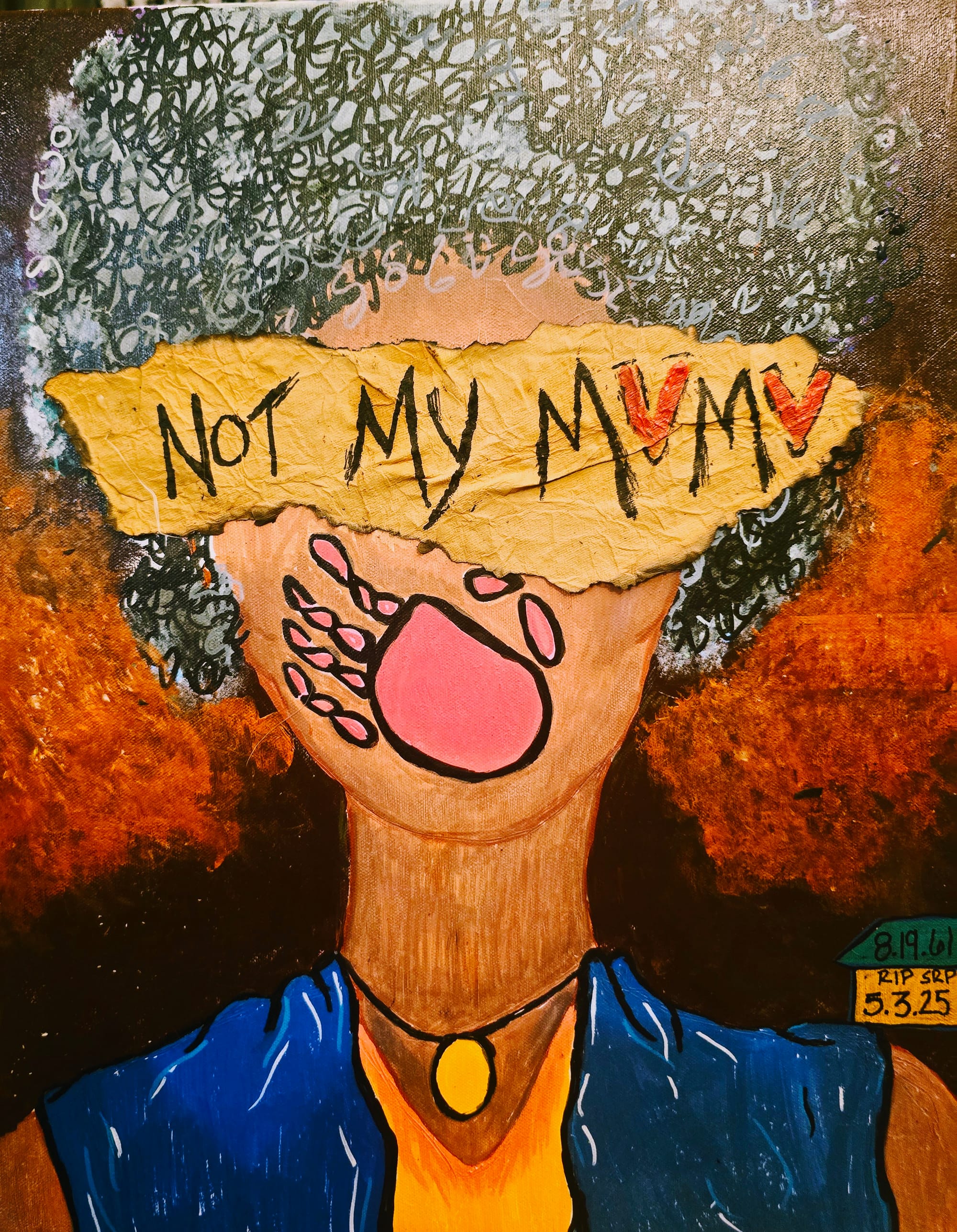
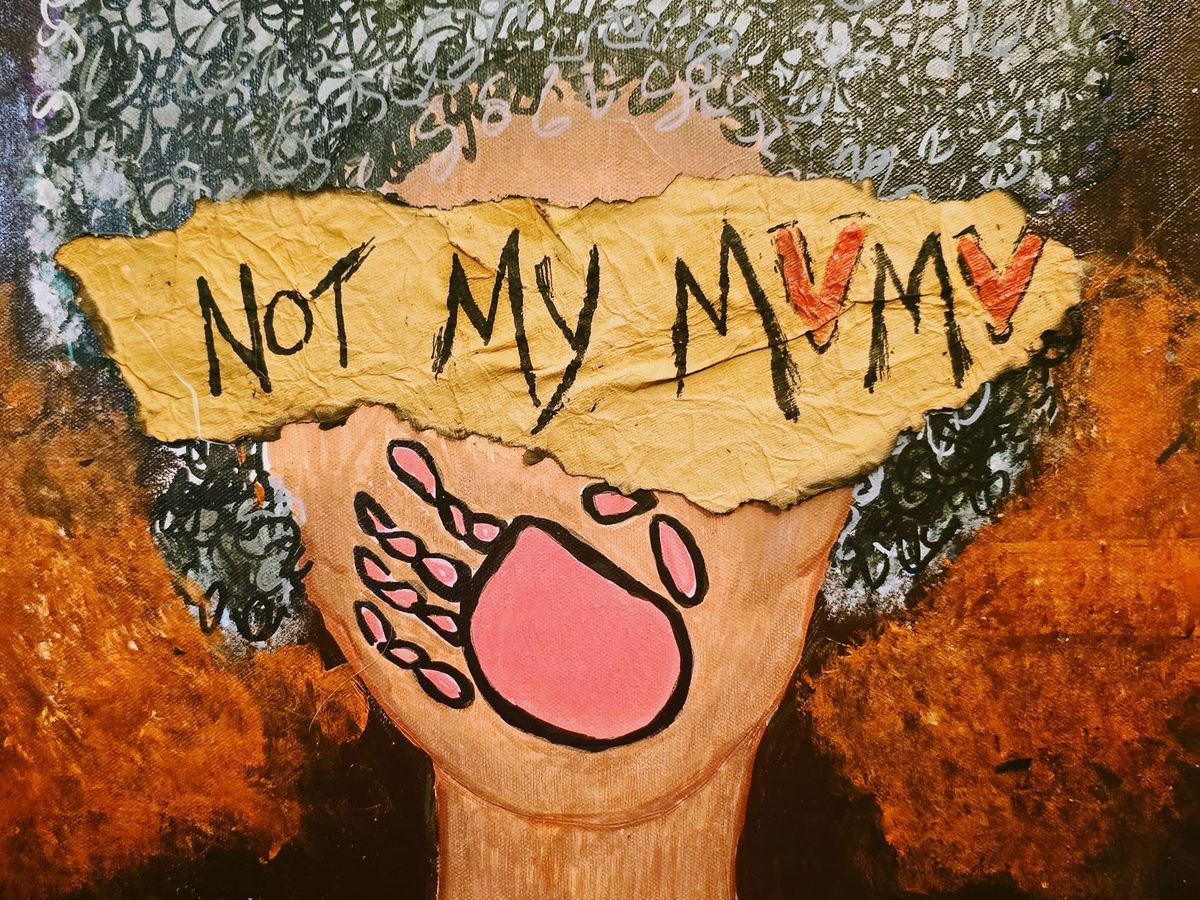
Not My Mvmv
The title of this piece, Not My Mvmv, uses the Mvskoke (Creek) alphabet to spell Mama.
I created the blindfold because I don't know if my mom will ever see justice. The hand over her mouth represents that her life was taken, along with her words.
The house in the background represents the house where she suffered. The dates are her birth and death dates.
The background is hellfire because that's what this feels like.
This piece reflects my grief, my questions and my hope that one day there will be answers.